Wet Loft Insulation Signs
Is your home feeling unusually cold, or have you noticed a musty odour lingering near the ceiling? If you suspect you might be dealing with wet loft insulation signs, you aren’t alone. Moisture in the loft is a common issue for homeowners across the UK, but if left unaddressed, it can lead to serious structural problems.
In this guide, we will explore the warning signs of soaked loft insulation, why it happens, and how to know when it is time to call in the professionals.
Common Wet Loft Insulation Signs
Recognising the early warning signs can save you thousands of pounds in repair costs. Here are the most common indicators that your insulation has been compromised by moisture.
1. Visible Damp Insulation in the Loft
The most obvious sign is seeing damp insulation in the loft. If you climb your loft ladder and notice that your mineral wool or fibreglass feels heavy, clumped, or visibly discoloured, it has likely absorbed water. Unlike high-performance alternatives, traditional fibreglass acts like a sponge, holding onto moisture rather than repelling it.
2. Mould and Mildew Growth
If you see black spots on your roof timbers, the felt, or the insulation itself, you are likely dealing with mould. Mould thrives in the damp, dark environment created by soaked loft insulation. This isn’t just an aesthetic issue; mould can impact your indoor air quality and may indicate that your insulation is no longer performing its job.
3. Musty Odours
A persistent, earthy, or “old” smell in your upper floors is a classic indicator of dampness. This odour is often caused by the biological breakdown of organic matter or mould caused by moisture trapped within the insulation layers.
4. Spongy or Sagging Insulation
Traditional insulation is designed to sit loosely between rafters. However, when it becomes wet, it loses its loft and begins to sag or compress. If you notice your insulation looks “flat” or unevenly distributed, it is a major sign that the material has lost its thermal effectiveness. If you are noticing these changes, it is worth reading more about signs that your loft insulation needs replacing.
Why Does Loft Insulation Get Wet?
Understanding the cause of the moisture can help you prevent it from happening again. Common culprits include:
- Roof Leaks: Damaged tiles or slipped slates allow rainwater to seep directly into the insulation.
- Condensation: This is perhaps the most common issue. Warm, moist air from your living areas rises into the cold loft. If the ventilation isn’t adequate, this air hits the cold surfaces, turns into water droplets, and gets trapped in your insulation.
- Thermal Bridging: Poorly installed insulation can create “cold spots” where condensation is more likely to form.
According to NHBC guidelines, if the moisture content in your timber reaches above 20%, you enter the “decay zone,” which can lead to wet or dry rot. This is why addressing wet loft insulation signs immediately is vital for the structural integrity of your home.
How to Resolve the Problem
If you have identified soaked loft insulation, simply adding more insulation on top will not solve the problem; in fact, it often makes it worse by trapping even more moisture.
Step 1: Remove the Damaged Material
The first priority is to get the wet material out. You should look into how to remove old or damaged loft insulation safely, ensuring that you protect your lungs and skin from fibres and mould spores during the process.
Step 2: Address the Moisture Source
Before installing new insulation, you must ensure the leak or condensation issue is fixed. This might involve repairing roof tiles or improving ventilation.
Step 3: Install High-Performance Insulation
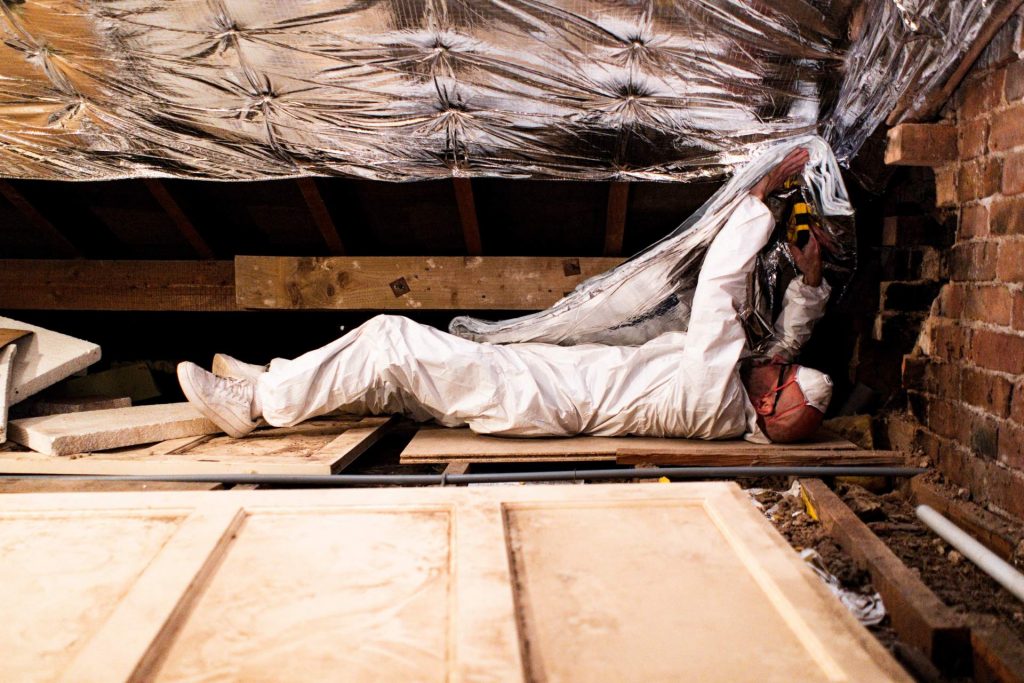
Once the loft is dry, we recommend replacing old, ineffective materials with a solution designed to handle moisture. At Loft Foil, we specialise in SuperFOIL Multifoil Insulation.
Unlike traditional mineral wool, SuperFOIL is:
- Moisture-resistant and mould-resistant: It won’t act like a sponge.
- Equipped with a vapour control layer: This prevents condensation from reaching your structural beams.
- Thin and efficient: It provides superior thermal performance without the bulk.
Book Your Free Loft Survey
Don’t wait for a small damp patch to become a structural nightmare. If you are worried about the condition of your loft, the best course of action is to get a professional opinion.
We offer a Free Loft Survey where our experienced surveyors will:
- Evaluate the condition of your existing insulation.
- Identify any signs of damp, mould, or structural issues.
- Provide a tailored recommendation to improve your home’s energy efficiency and protect your property.