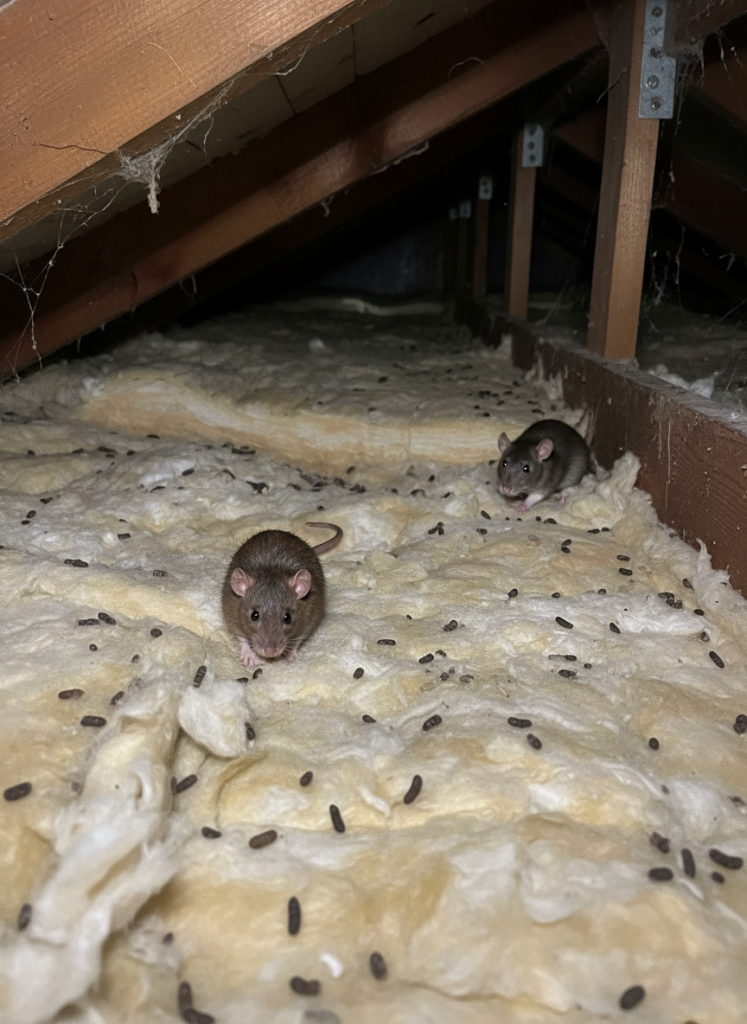
Lofts are often overlooked spaces in our homes, but they play a crucial role in maintaining energy efficiency and comfort. Unfortunately, traditional loft insulation materials can sometimes attract unwanted guests—pests like rats, mice, and insects. If you’ve discovered rat droppings or other signs of infestation in your loft insulation, it’s not just an unpleasant surprise—it’s a serious issue that needs addressing.
Why Is This a Concern?
- Health Risks
Rat droppings and urine can carry harmful pathogens, including leptospirosis (which can lead to Weil’s disease), hantavirus, and Salmonella. These can pose significant health risks to you and your family, especially if the contaminated insulation is disturbed and particles become airborne. - Structural Damage
Rats and other pests often chew through insulation, wiring, and even wooden beams. This can lead to costly repairs and, in some cases, fire hazards if electrical wiring is damaged. - Reduced Insulation Efficiency
Traditional insulation materials like fibreglass or mineral wool can become compacted, shredded, or contaminated by pests, reducing their thermal efficiency. This means higher energy bills and a less comfortable home. - Odour and Hygiene Issues
The smell of droppings, urine, or even deceased pests can linger in your loft, making it an unpleasant space and potentially affecting the air quality in your home.
Why Are Traditional Insulation Materials Vulnerable?
Traditional insulation materials, such as fibreglass, mineral wool, or cellulose, can provide an inviting environment for pests. These materials are often soft, warm, and easy to burrow into, making them ideal nesting sites. Additionally, if there are gaps or entry points in your loft, pests can easily gain access and settle in.
What Should You Do If You Find Rat Droppings in Your Loft Insulation?
- Avoid Direct Contact
Do not touch or disturb the droppings or insulation without proper protective gear. Rat droppings can release harmful particles into the air when disturbed. - Call a Professional Pest Control Service
A pest control expert can identify the extent of the infestation, remove the pests, and seal any entry points to prevent future issues. - Replace Contaminated Insulation
Once the pests are removed, it’s essential to replace any damaged or contaminated insulation. Leaving it in place can continue to pose health risks and reduce your home’s energy efficiency. - Consider Upgrading to Foil Insulation
Modern foil insulation is a cleaner, safer, and more pest-resistant alternative. Unlike traditional materials, foil insulation is not an attractive nesting material for pests. It’s also easier to clean and maintain, making it a long-term solution for a healthier loft space.
Why Choose Foil Insulation?
Foil insulation offers several advantages over traditional materials, particularly when it comes to pest prevention:
- Non-Nesting Material: Pests are less likely to burrow into foil insulation as it doesn’t provide the soft, fibrous texture they prefer.
- Moisture Resistance: Foil insulation is resistant to moisture, which can deter pests that are drawn to damp environments.
- Durability: Unlike fibreglass or mineral wool, foil insulation doesn’t degrade or compact over time, maintaining its efficiency and integrity.
- Easy to Clean: If pests do manage to enter your loft, foil insulation is much easier to clean and sanitise compared to traditional materials.
Preventing Future Infestations
To keep your loft pest-free, follow these tips:
- Seal Entry Points: Inspect your loft for gaps, cracks, or holes where pests could enter, and seal them with appropriate materials.
- Keep the Loft Clean: Avoid storing food or organic materials in your loft, as these can attract pests.
- Regular Inspections: Check your loft periodically for signs of pests, such as droppings, gnawed materials, or unusual odours.
- Upgrade Your Insulation: Consider replacing old insulation with modern foil insulation to reduce the risk of future infestations.
Final Thoughts
Dealing with pests in your loft insulation is not just a nuisance—it’s a health and safety concern. By addressing the issue promptly and upgrading to a modern insulation solution like foil insulation, you can protect your home, improve energy efficiency, and enjoy peace of mind.
If you’re concerned about pests in your loft or want to learn more about the benefits of foil insulation, get in touch with us today. Our team of experts is here to help you create a cleaner, safer, and more efficient home.