Rot in Roof Timbers Caused by Condensation
For many homeowners, the loft is a space that is rarely visited. However, it is one of the most critical areas of your property for maintaining structural integrity and thermal efficiency. One of the most serious issues a homeowner can face is discovering rot in roof timbers caused by condensation.
If you have noticed mould in your loft or have spotted loft insulation black spots, you may be facing a much deeper problem than just an aesthetic issue. In this article, we will explain the link between moisture, insulation, and timber decay, and how you can protect your home.
The Dangerous Link Between Condensation and Timber Rot
Condensation occurs when warm, moist air from your living spaces rises into the loft and meets the cold surfaces of the roof. When this moisture settles, it creates the perfect breeding ground for mould and, more dangerously, for wood-decaying fungi.
The NHBC (National Housebuilding Council) provides clear guidelines regarding moisture in timber. When the moisture content in your roof timbers rises above 20%, they enter the “decay zone.” At this stage, the structural wood is at risk of developing wet rot or dry rot. This is the primary driver behind rot in roof timbers caused by condensation.
How to Spot the Early Warning Signs
Before structural damage becomes irreversible, there are several clues that your loft environment is compromised:
1. Loft Insulation Black Spots
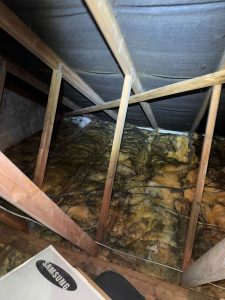
One of the most common early indicators is seeing loft insulation black spots. These dark patches are often colonies of mould feeding on the moisture trapped within the insulation material. If your insulation is traditional mineral wool or fibreglass, it acts like a sponge, holding that moisture against your rafters, which accelerates the decay process.
2. Mouldy Loft Insulation
If your insulation looks discoloured, clumped, or feels heavy, you are likely dealing with mouldy loft insulation. Unlike modern high-performance foils, traditional materials lose their ability to insulate when they become damp, meaning your energy bills rise while your risk of structural rot increases.
3. Visible Mould in the Loft
Seeing mould in your loft on the underside of the roof felt or directly on the wooden rafters is a major red flag. This indicates that the humidity levels are high enough to support fungal growth, which can eventually lead to the total degradation of your roof structure.
To understand how the right materials can help, read our guide on how loft insulation can prevent mould and damp in your home.
Why Traditional Insulation Can Make the Problem Worse
Many homeowners believe that adding more thick, bulky insulation will help keep the house warm. However, if that insulation is not designed to manage vapour, it can actually trap moisture against the roof timbers.
Traditional fibreglass and mineral wool are “breathable” in a way that often allows moisture to get trapped between the insulation and the roof felt. This creates a damp microclimate that leads to the very mould in your loft that we discussed earlier.
How to Prevent Timber Rot and Condensation
Preventing structural decay requires a two-pronged approach: managing airflow and using the right materials.
How to Prevent Timber Rot and Condensation
Preventing structural decay requires a two-pronged approach: managing airflow and using the right materials.
1. Improve Ventilation
Ensuring that your loft has adequate airflow is essential to prevent moisture build-up. If you are struggling with dampness, we recommend reading our expert advice on how to stop condensation in a loft.
2. Use a Vapour Control Layer
The most effective way to prevent rot in roof timbers caused by condensation is to stop moisture from reaching the wood in the first place. This is where SuperFOIL Multifoil Insulation excels.
Our SuperFOIL solutions feature an integrated vapour control layer. This acts as a barrier, preventing warm, moist air from the house from condensing on the cold roof timbers, effectively protecting your structural beams from moisture damage.
Don't Wait for Structural Damage to Occur
If you have noticed loft insulation black spots or suspect you have mouldy loft insulation, the time to act is now. Timber rot can be expensive to repair and can significantly reduce the value of your property.
At Loft Foil, we are official SuperFOIL and ProPerla Approved Installers with over 20 years of experience in the construction industry. We specialise in identifying moisture issues and providing long-term, manufacturer-backed solutions.
Book Your Free Loft Survey
We recommend booking a Free Loft Survey to get a professional assessment of your property. Our experienced surveyors will check for:
- Signs of moisture and condensation.
- The condition of your existing insulation.
- Any visible mould or signs of timber decay.
- Tailored recommendations to protect your home and lower your energy bills.