Loft Insulation Return on Investment: Is It Worth It?
When homeowners look at ways to improve their property’s energy efficiency, one question consistently rises to the top: Does loft insulation save money?
With energy prices remaining a significant concern for households across the UK, calculating the loft insulation return on investment (ROI) has become essential. If you are considering upgrading your home’s thermal performance, you aren’t just looking for comfort; you are looking for a smart financial decision.
In this guide, we will break down the factors that influence your payback on loft insulation and explain why choosing the right materials is the key to maximising your savings.
Understanding Loft Insulation ROI
The “return on investment” in home improvement refers to how quickly the money you spend on an upgrade is recouped through reduced running costs or increased property value.
When calculating loft insulation ROI, there are three main pillars to consider:
- Immediate Energy Savings: The reduction in your monthly heating bills.
- Property Value: The impact of a better EPC (Energy Performance Certificate) rating on your home’s market value.
- Property Protection: The cost savings found by preventing structural issues like damp, mould, and rot.
To get a clearer picture of your potential savings, we recommend using our Loft Insulation Energy Savings Calculator to estimate how much you could save based on your specific property type.
Does Loft Insulation Save Money?
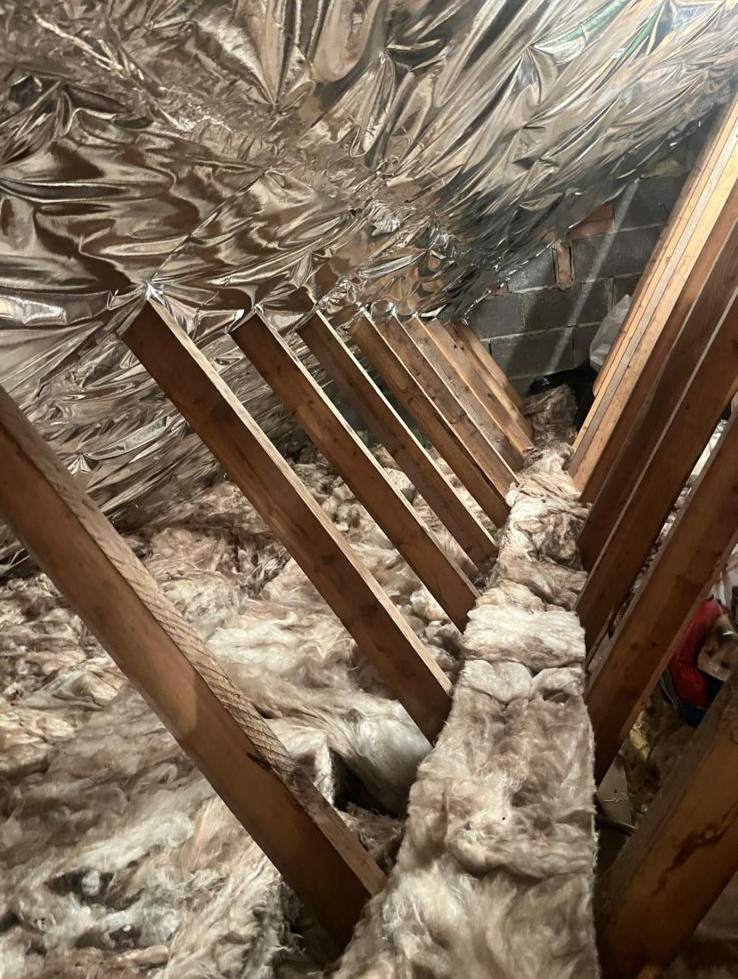
The short answer is yes. Heat rises, and without adequate insulation, a significant portion of the warmth generated by your heating system escapes through your roof.
Traditional insulation methods, such as mineral wool, can offer savings, but they often face challenges like sagging, settling, or moisture retention over time. This can diminish the payback on loft insulation as the material loses its effectiveness.
For a more detailed breakdown of the mechanics behind these savings, read our deep dive on How Loft Insulation Can Save You Money on Energy Bills.
Why SuperFOIL Offers a Superior Return on Investment
Not all insulation is created equal. At Loft Foil, we specialise in Foil Loft Insulation, specifically the high-performance YBS SuperQuilt 19-layer solution. When comparing the loft insulation ROI of multifoil versus traditional materials, SuperFOIL often comes out on top for several reasons:
1. Unrivalled Heat Retention
SuperFOIL reflects up to 97% of radiant heat back into your living space during the winter. It also works in reverse during the summer, reflecting external heat away to keep your upstairs rooms cool. This year-round thermal regulation maximises your energy savings across all four seasons.
2. Space-Saving Thin Profile
Traditional mineral wool requires deep, bulky layers (often up to 270mm) to achieve high thermal performance, which can eat into your loft storage space. SuperFOIL is incredibly thin, allowing you to retain more usable space in your loft while still meeting UK Building Regulations Part L (achieving a U-value of 0.16 W/m²K or lower).
3. Longevity and Durability
A major factor in loft insulation ROI is how long the product lasts. Unlike fibreglass or mineral wool, which can become damp, mouldy, or compressed over time, SuperFOIL is:
- Moisture-resistant and mould-resistant
- Non-fibrous (safe for your lungs and skin)
- Resistant to pests and fire
- Does not sag or settle, meaning its insulating properties remain constant for decades.
4. Preventing Costly Structural Damage
A hidden part of the payback on loft insulation is the prevention of damage. Traditional insulation can sometimes trap moisture, leading to condensation and timber decay (where moisture levels above 20% can cause dry or wet rot). SuperFOIL features an integrated vapour control layer that prevents condensation, protecting your roof beams and structural integrity. Avoiding a single major timber repair job can significantly increase your total ROI.
Factors That Affect Your Payback Period
While we aim for the fastest possible payback, several factors will influence your individual results:
- The Type of Property: Victorian terraces in Bristol or Georgian townhouses in Bath may have different thermal requirements compared to modern developments in the West Midlands.
- Current Insulation State: If you currently have ineffective, damp, or “settled” fibreglass, replacing it with SuperFOIL will provide a much more dramatic jump in energy savings.
- Spray Foam Removal: If your property has existing spray foam insulation, you may face mortgage hurdles. Our professional spray foam removal service not only restores your ability to sell the property but allows for a high-performance SuperFOIL installation that secures your investment.
Conclusion: Is the Investment Worth It?
When you factor in the energy savings, the increased property value, the protection against damp, and the incredible longevity of the product, the loft insulation return on investment is exceptionally high.
By choosing an official SuperFOIL Approved Installer like Loft Foil, you aren’t just buying a product; you are investing in a manufacturer-backed solution that includes a 25-year guarantee on our installations.
Ready to find out your potential savings?
Contact the Loft Foil team today to book your free, no-obligation survey. Our expert surveyors will assess your loft, identify any damp or structural issues, and provide a tailored recommendation to help you save money and protect your home for years to come.