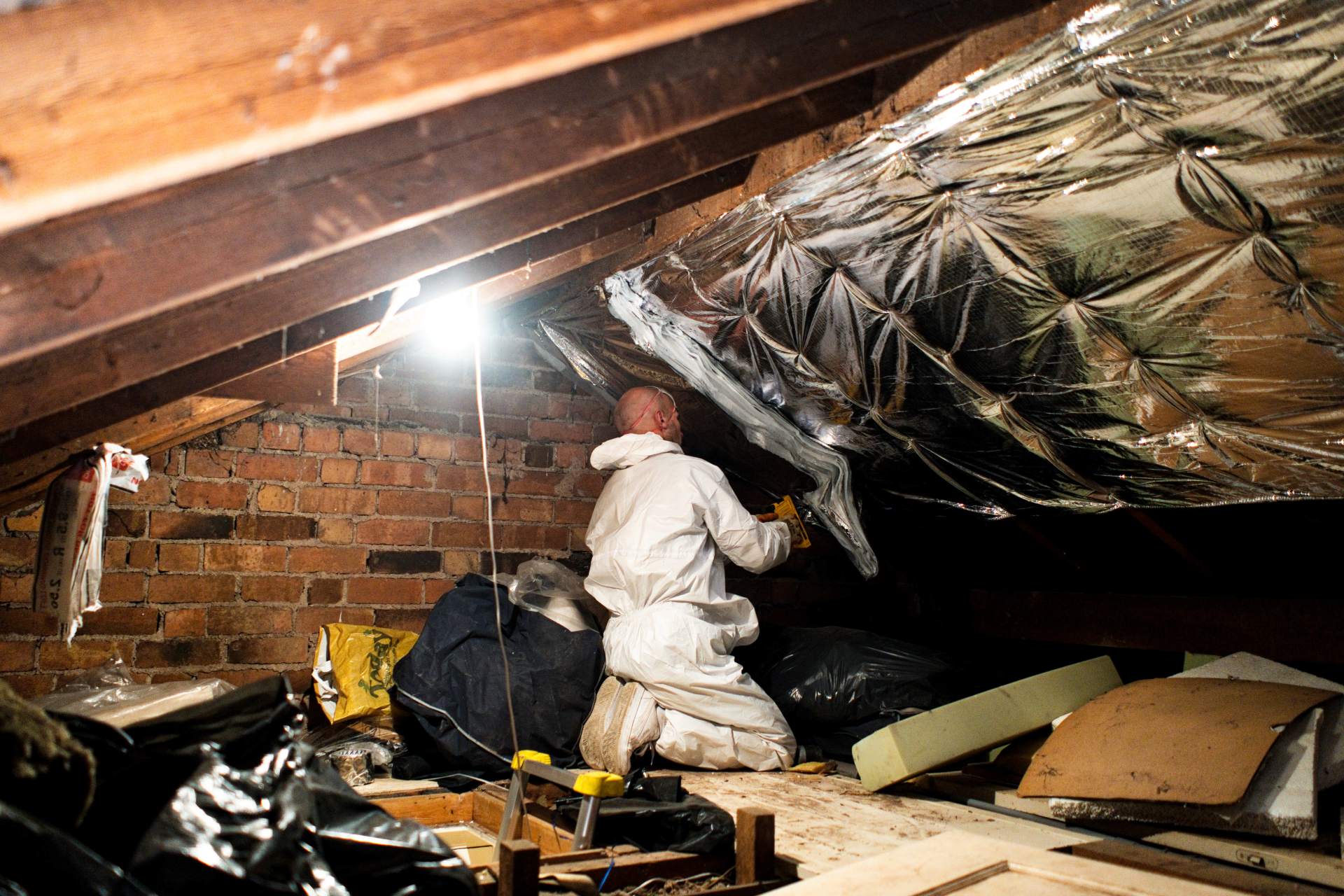
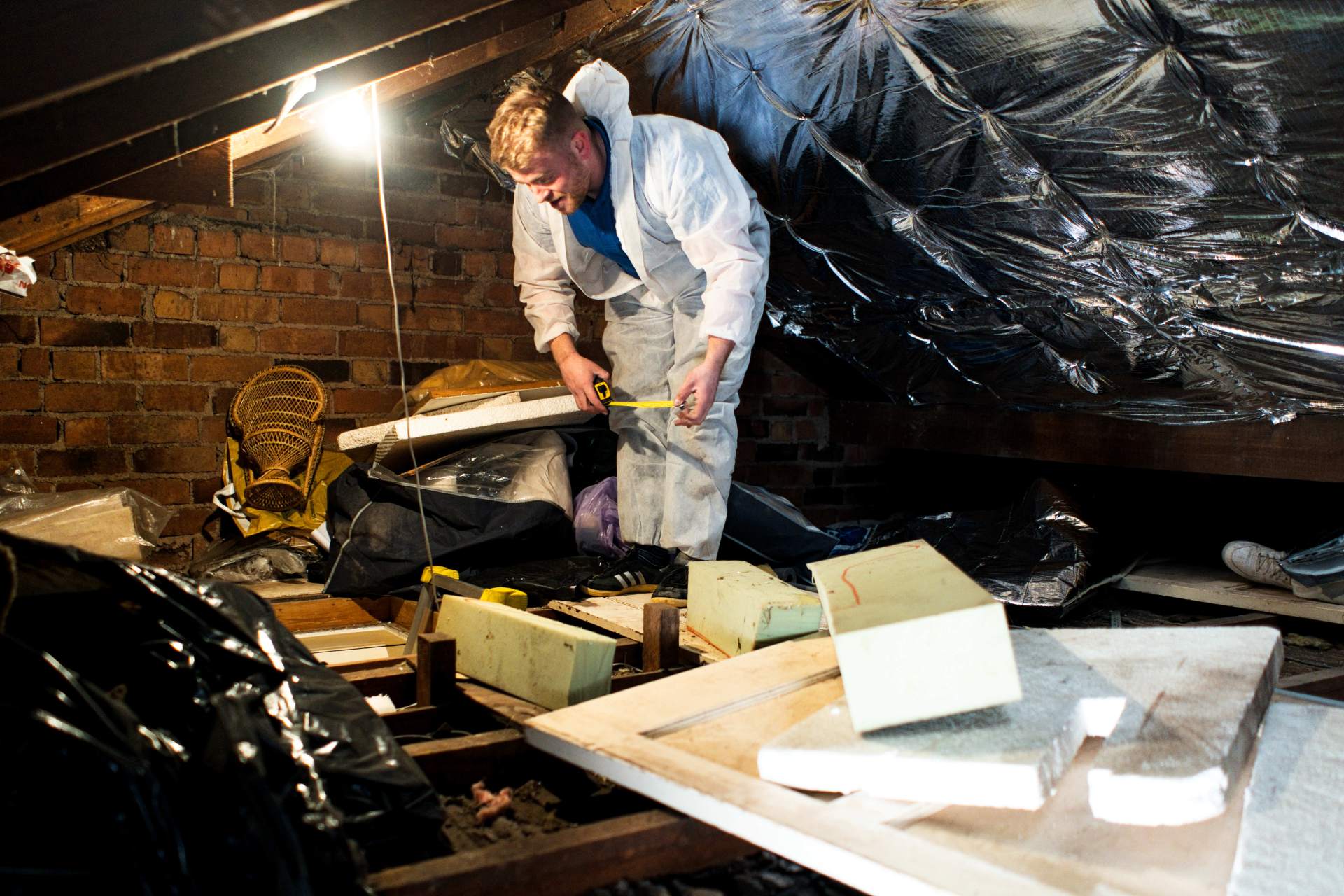
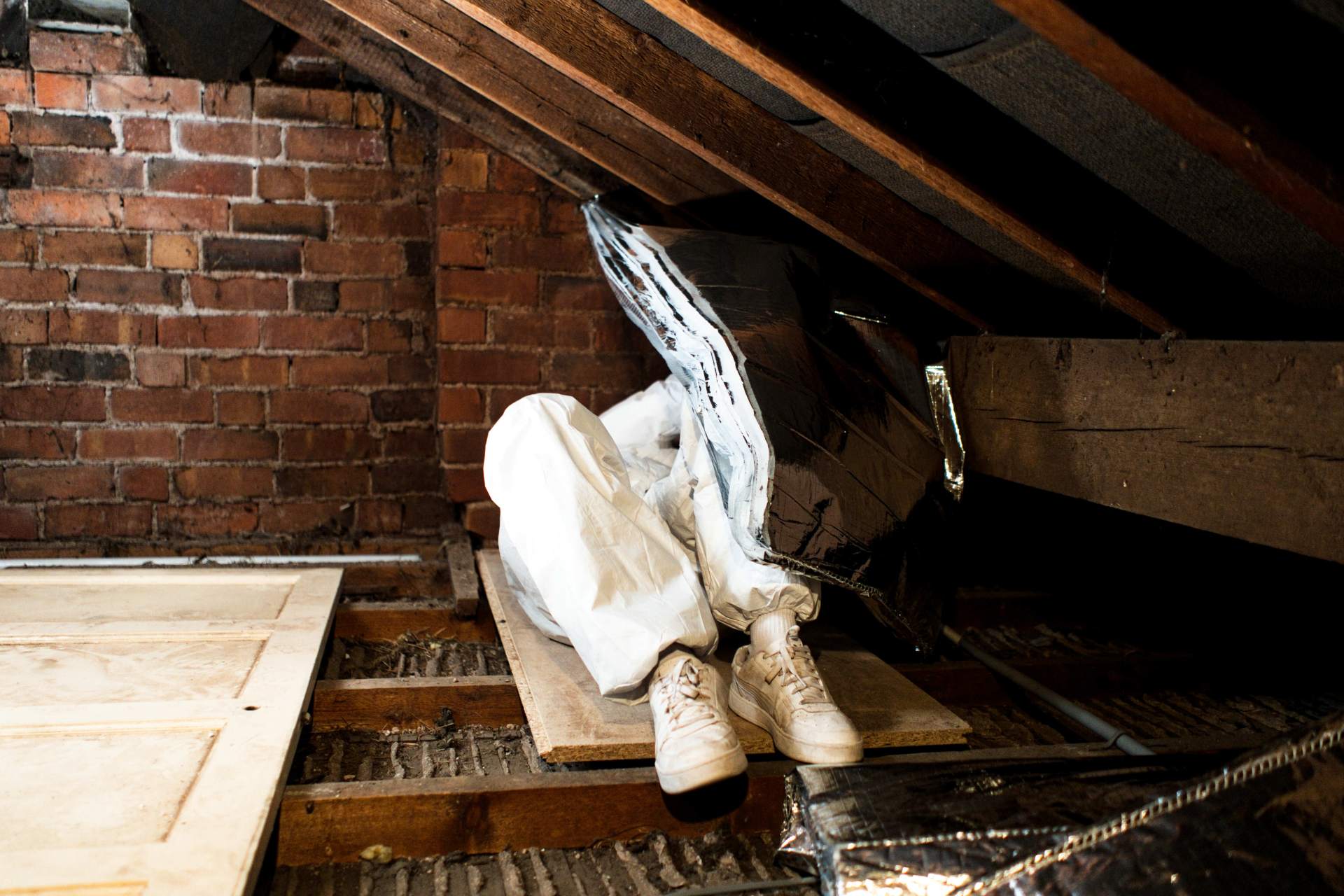
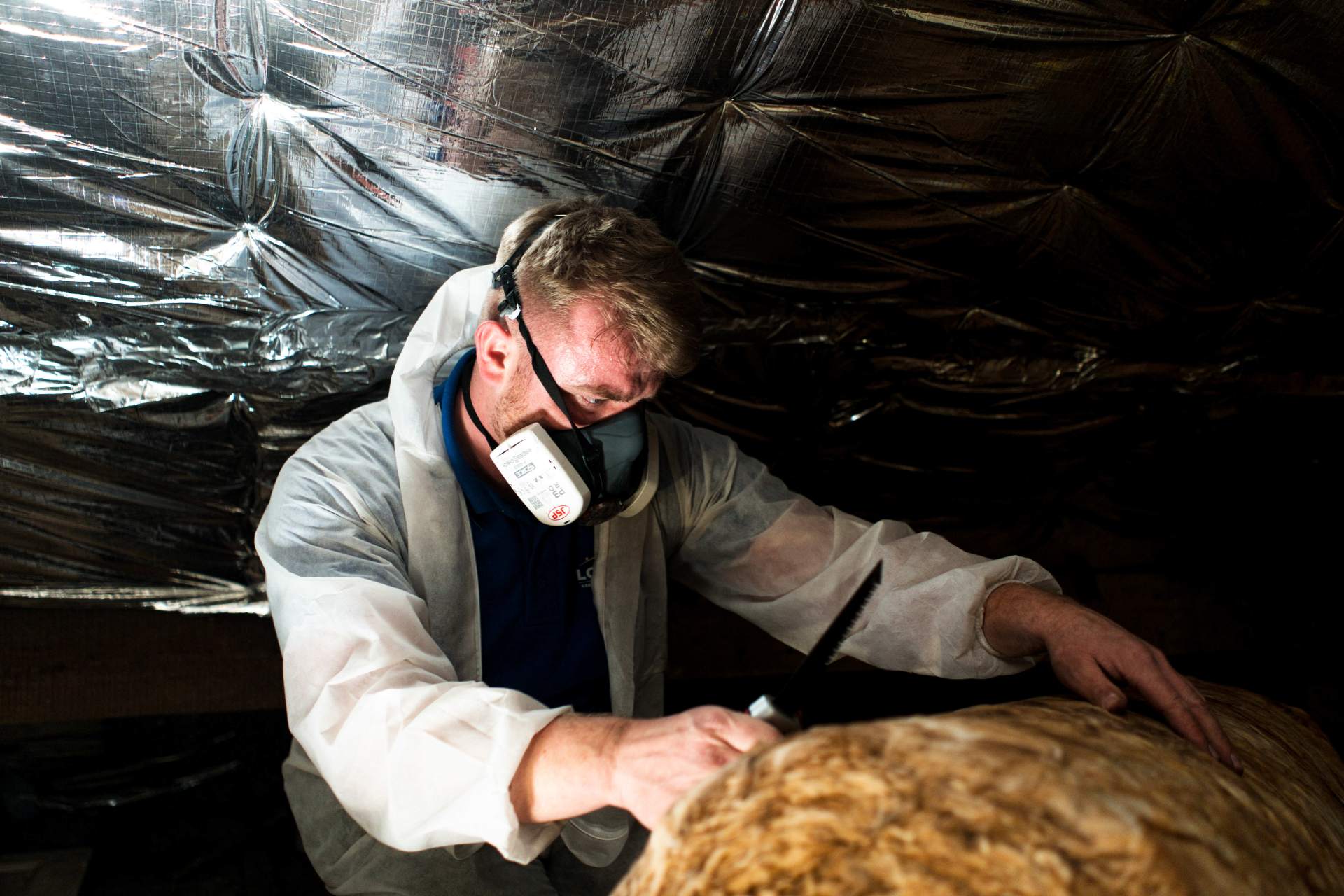
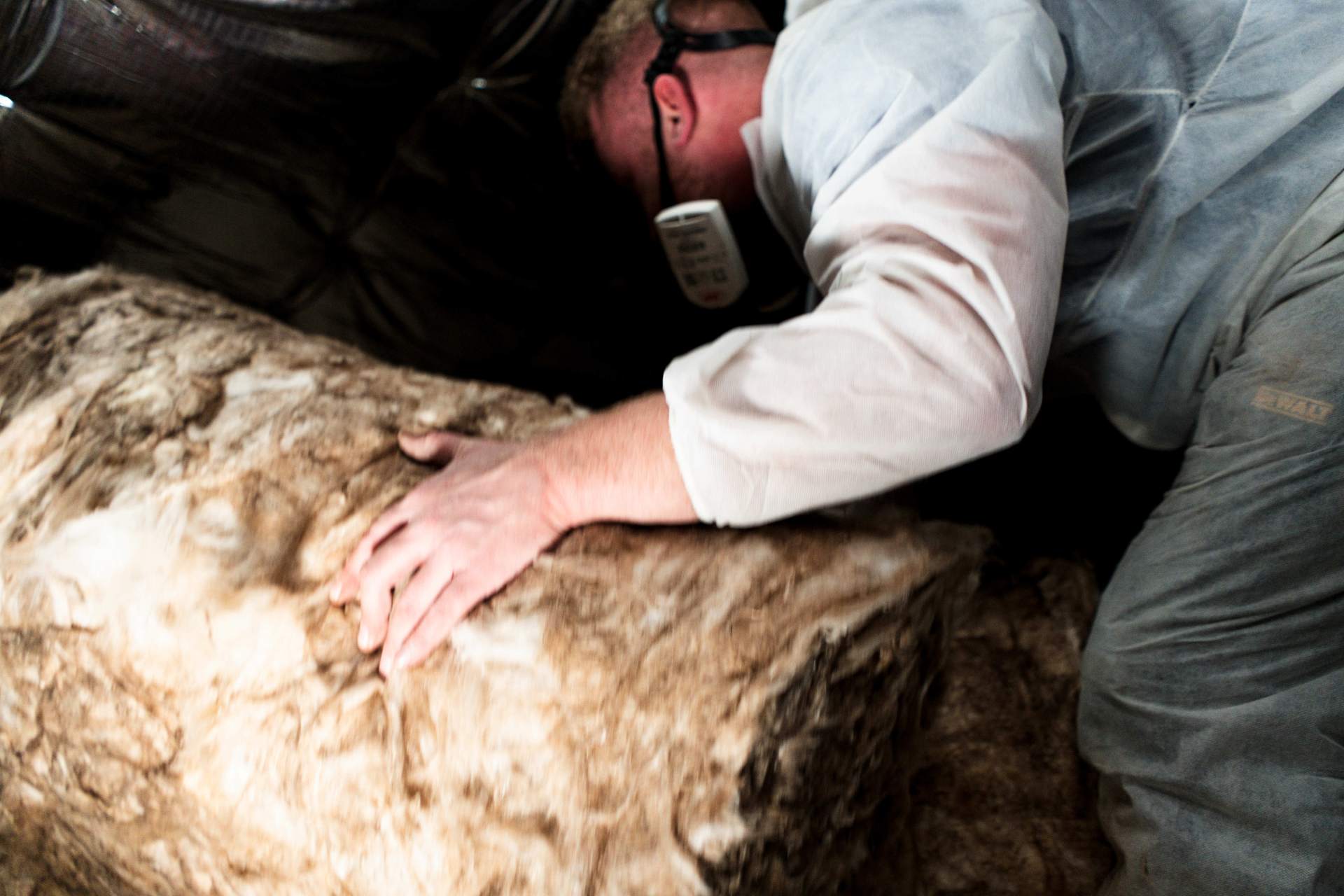
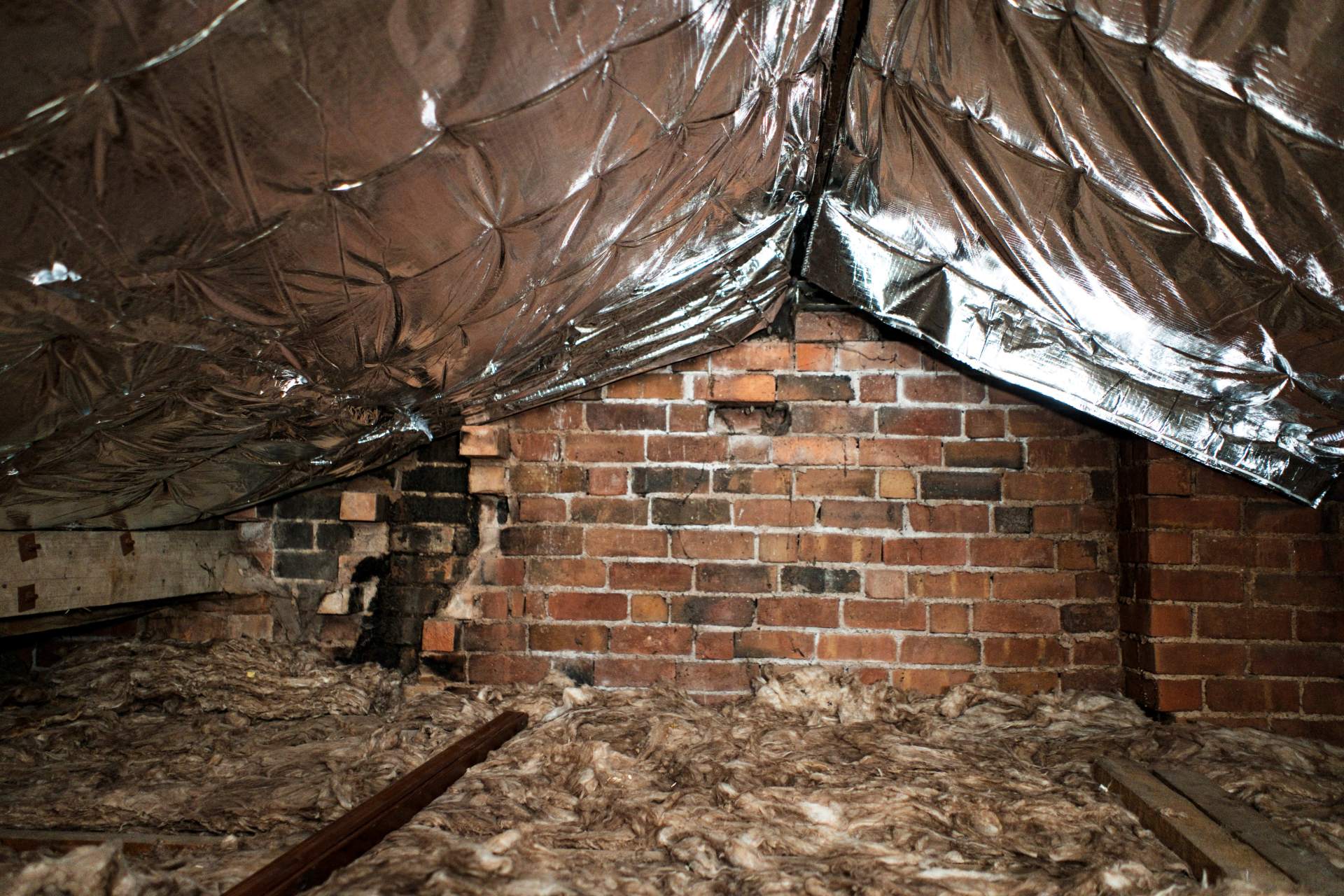
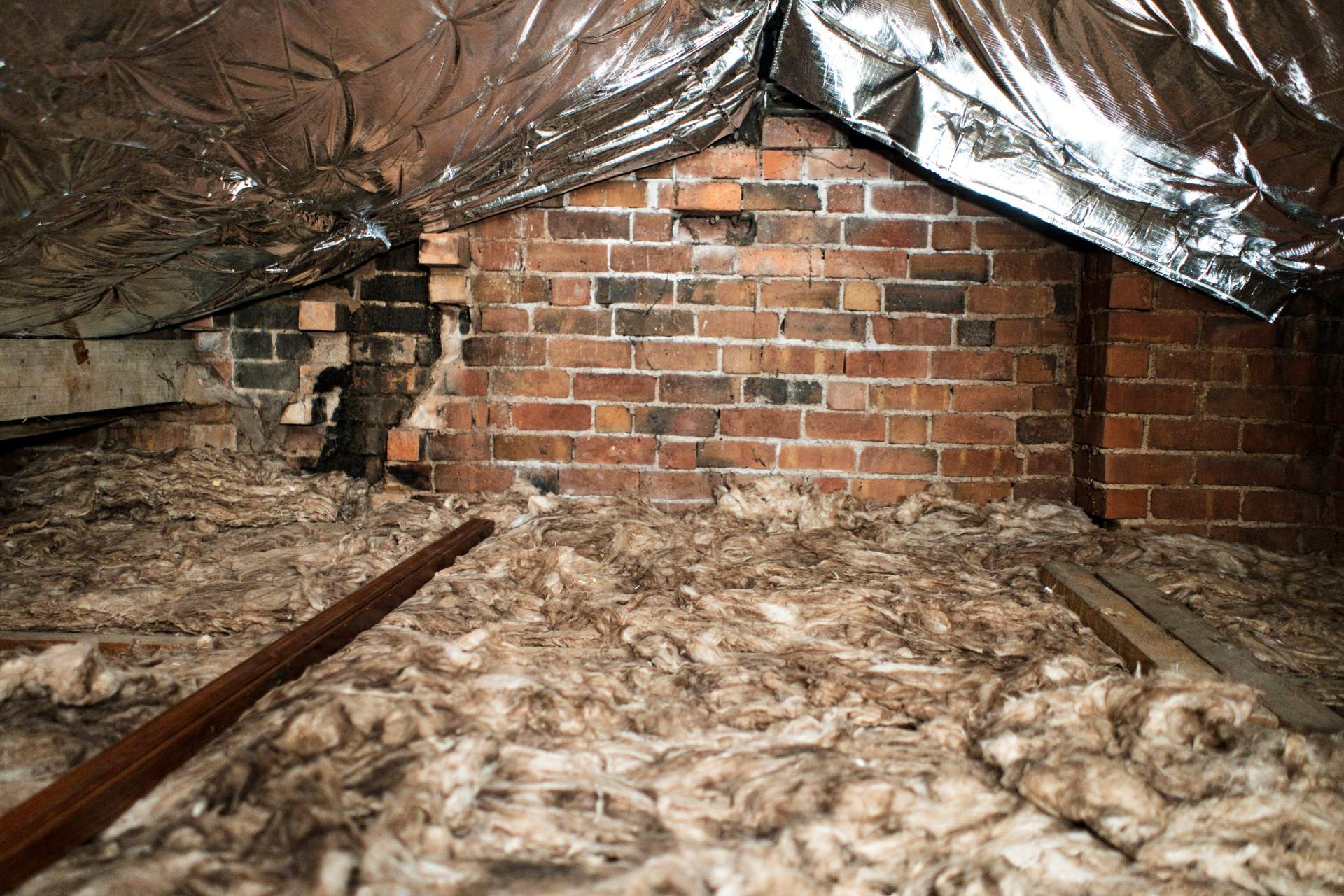
This project, executed in Malvern, Worcestershire, addressed significant issues with a property’s loft insulation. Our team was called in to assess and rectify high levels of moisture detected within the roof rafters, a common precursor to structural damage and reduced energy efficiency. Furthermore, the existing fiberglass insulation, confirmed to be over three decades old, was saturated with moisture and had significantly degraded, rendering it ineffective.
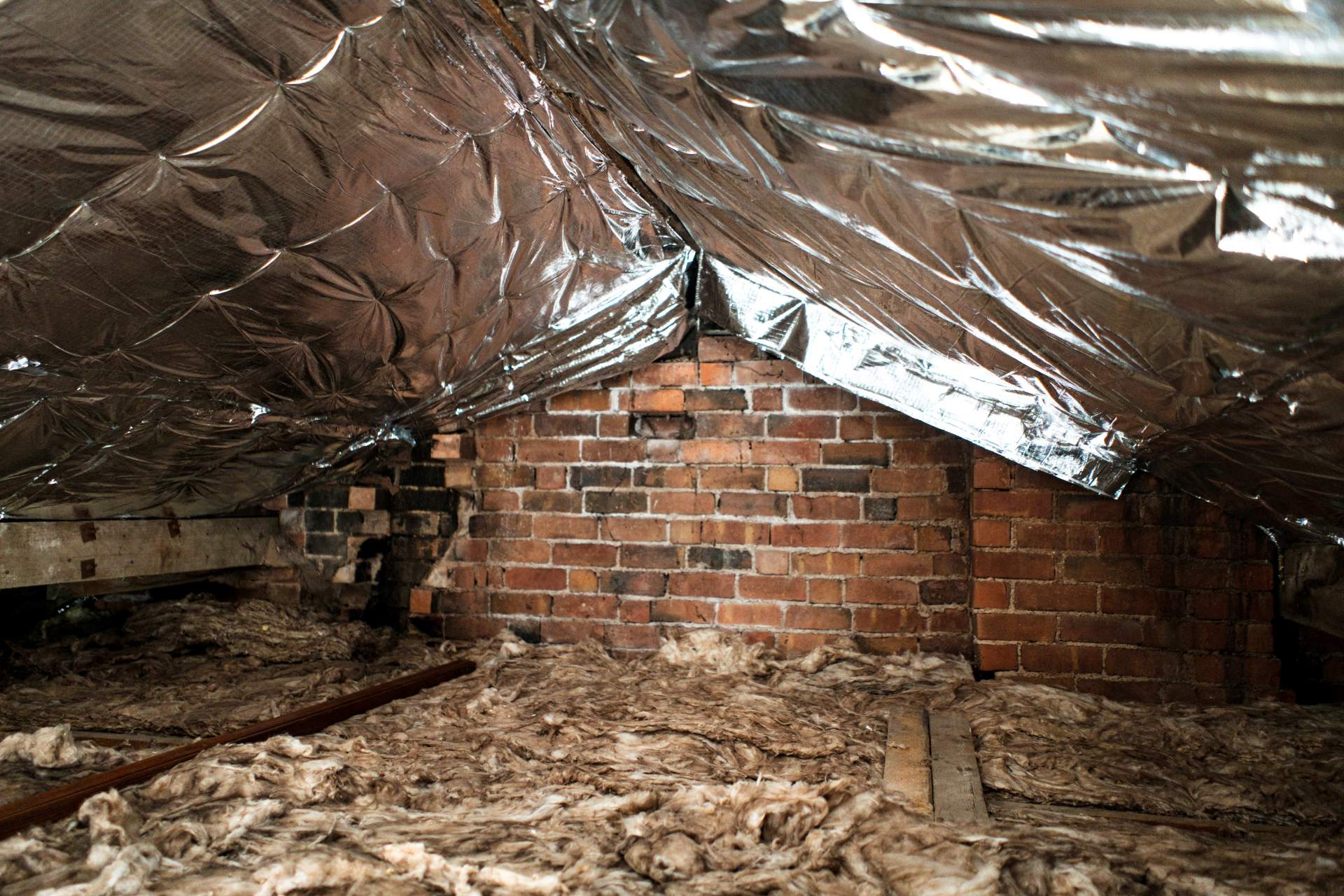
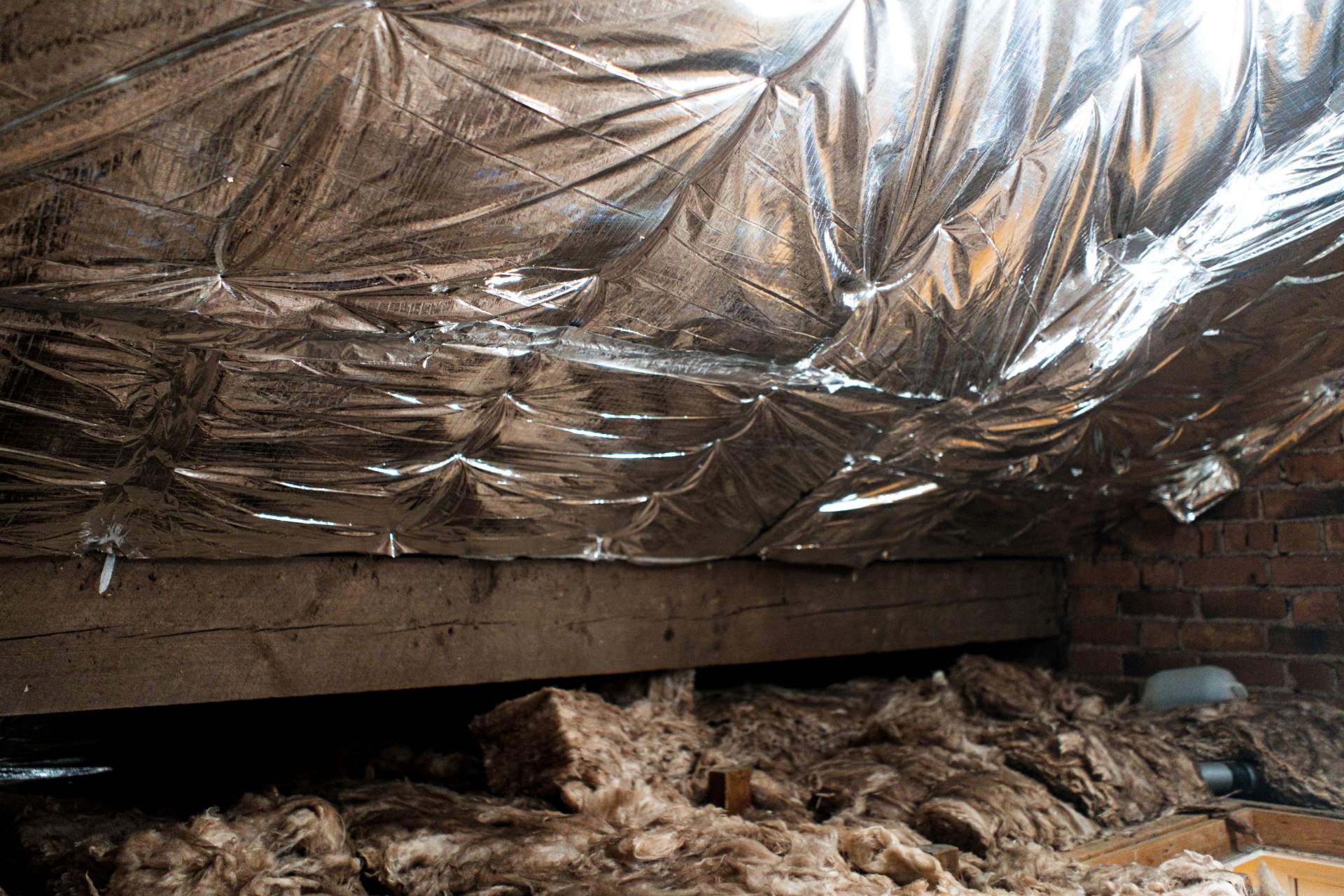
Our comprehensive solution involved the careful and complete removal of all the old, compromised fiberglass insulation. This step was crucial not only to eliminate the moisture source but also to prepare the loft for a modern, high-performance upgrade. We then proceeded to install new, high-quality loft roll insulation, chosen for its superior thermal properties and resistance to moisture.
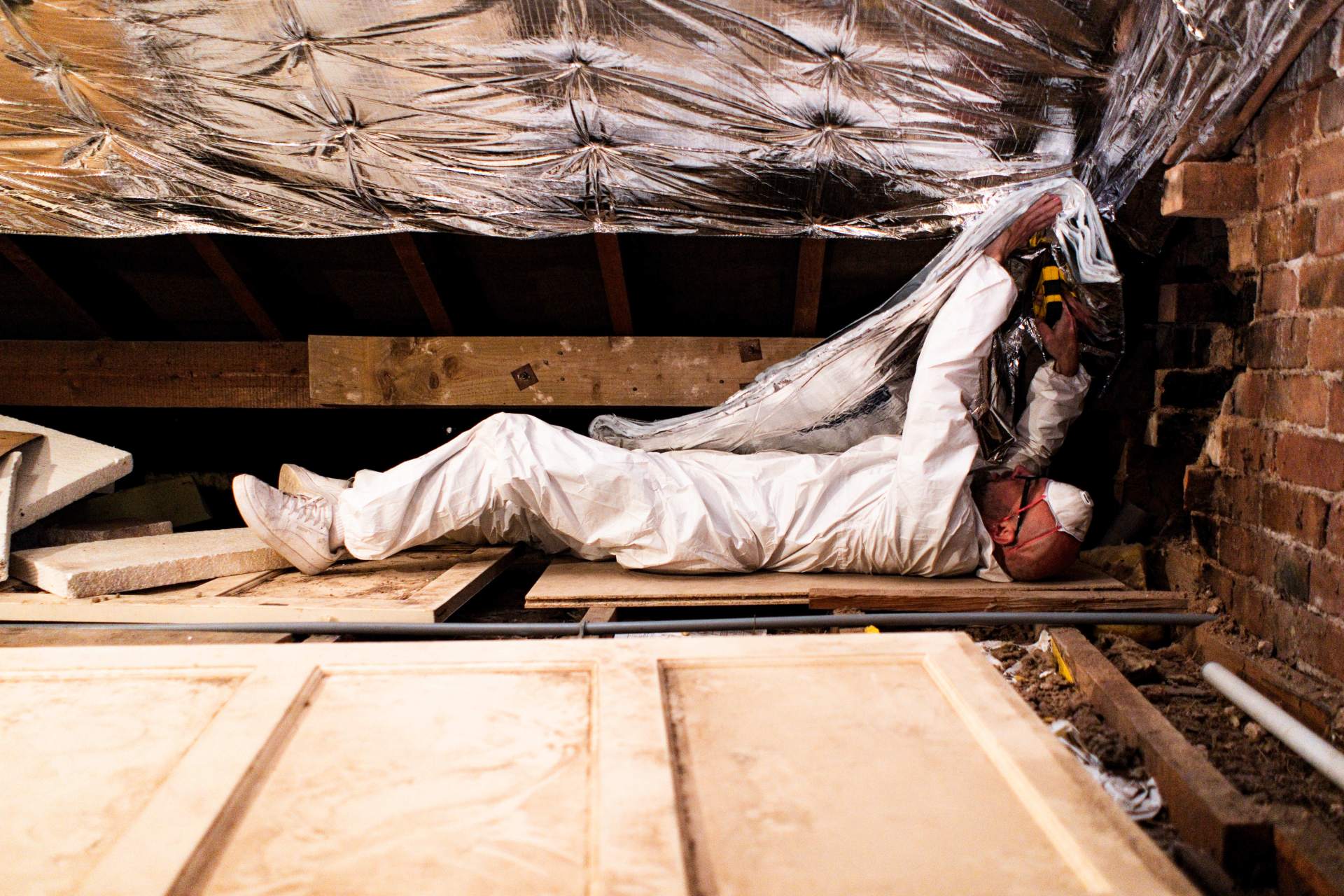
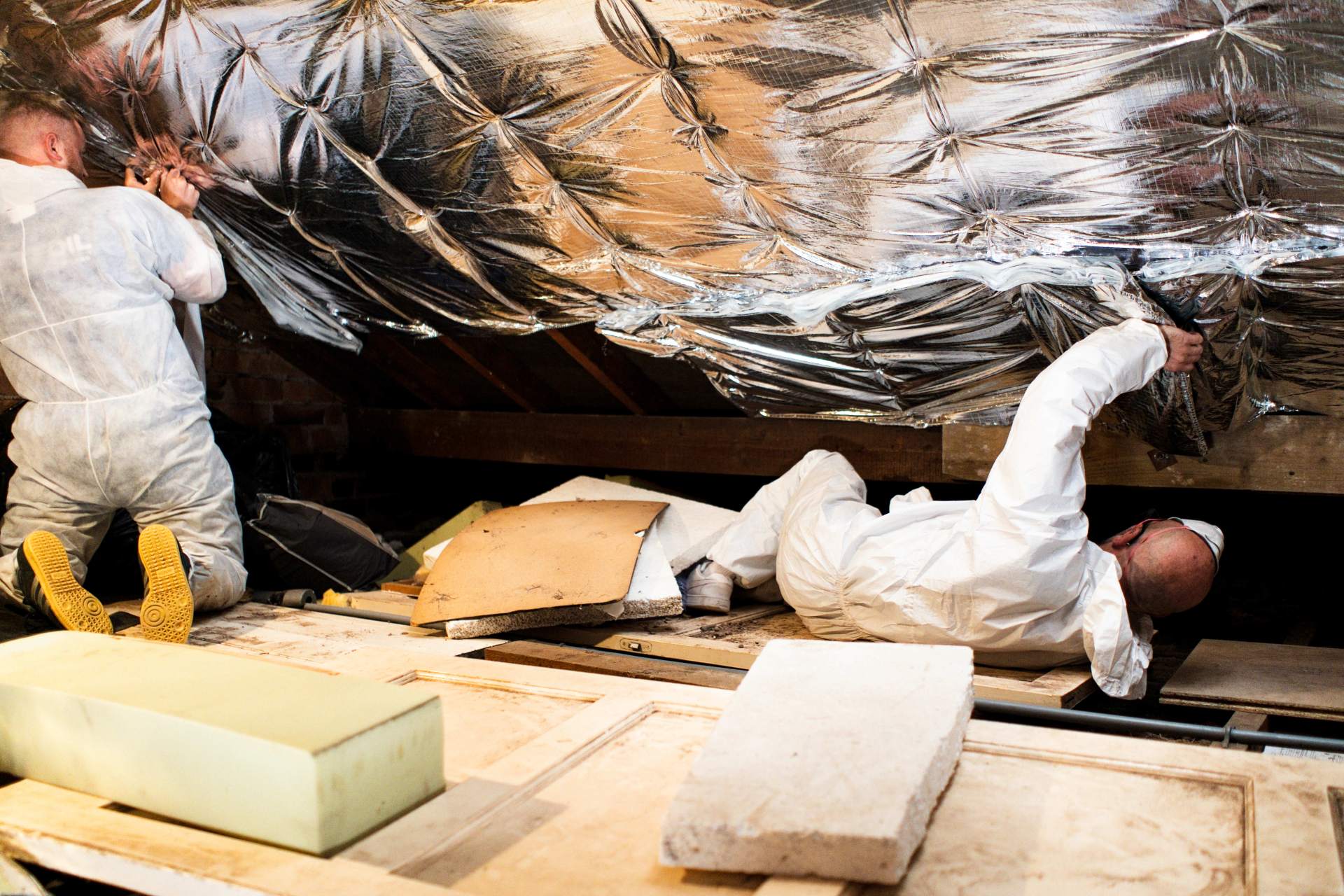
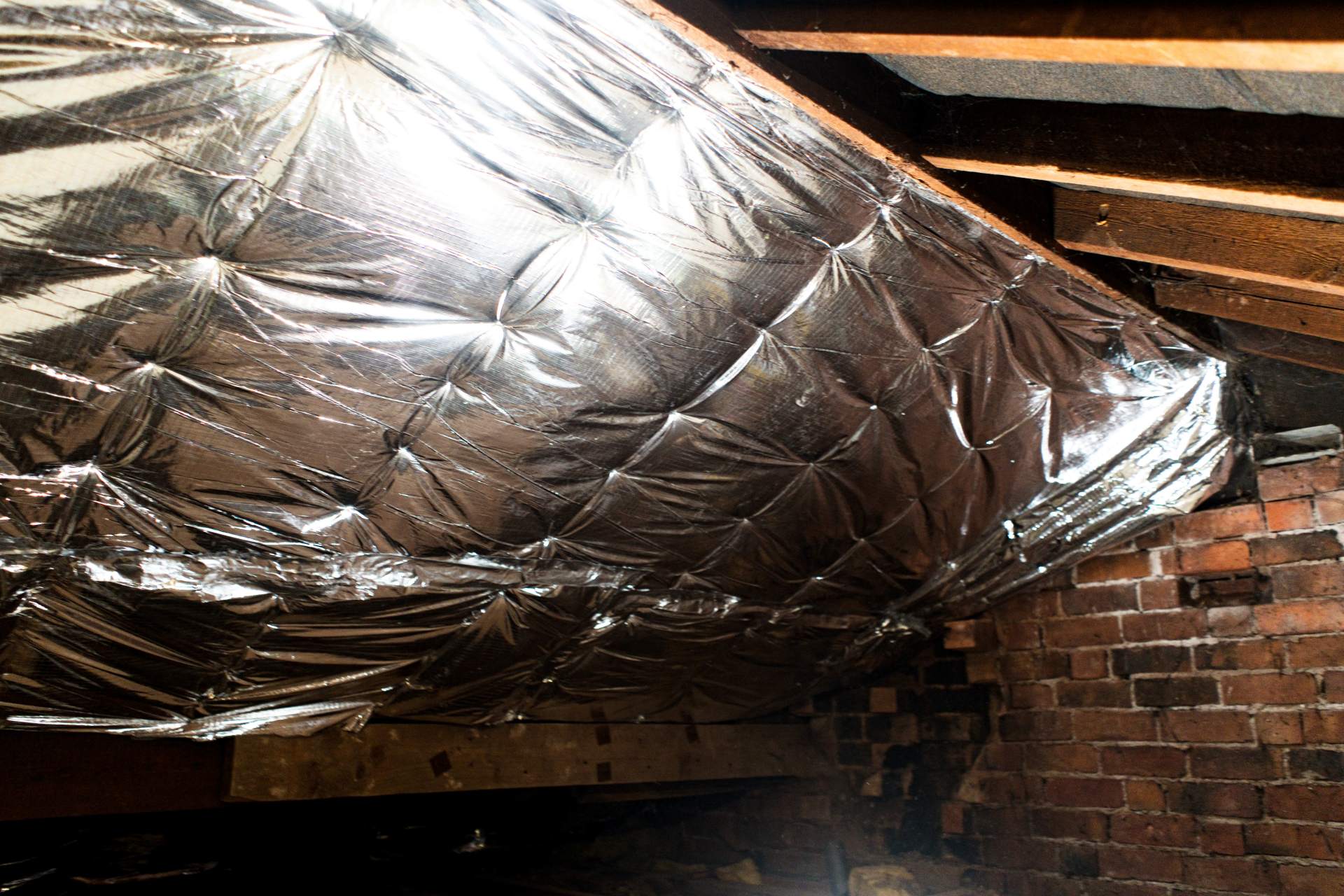
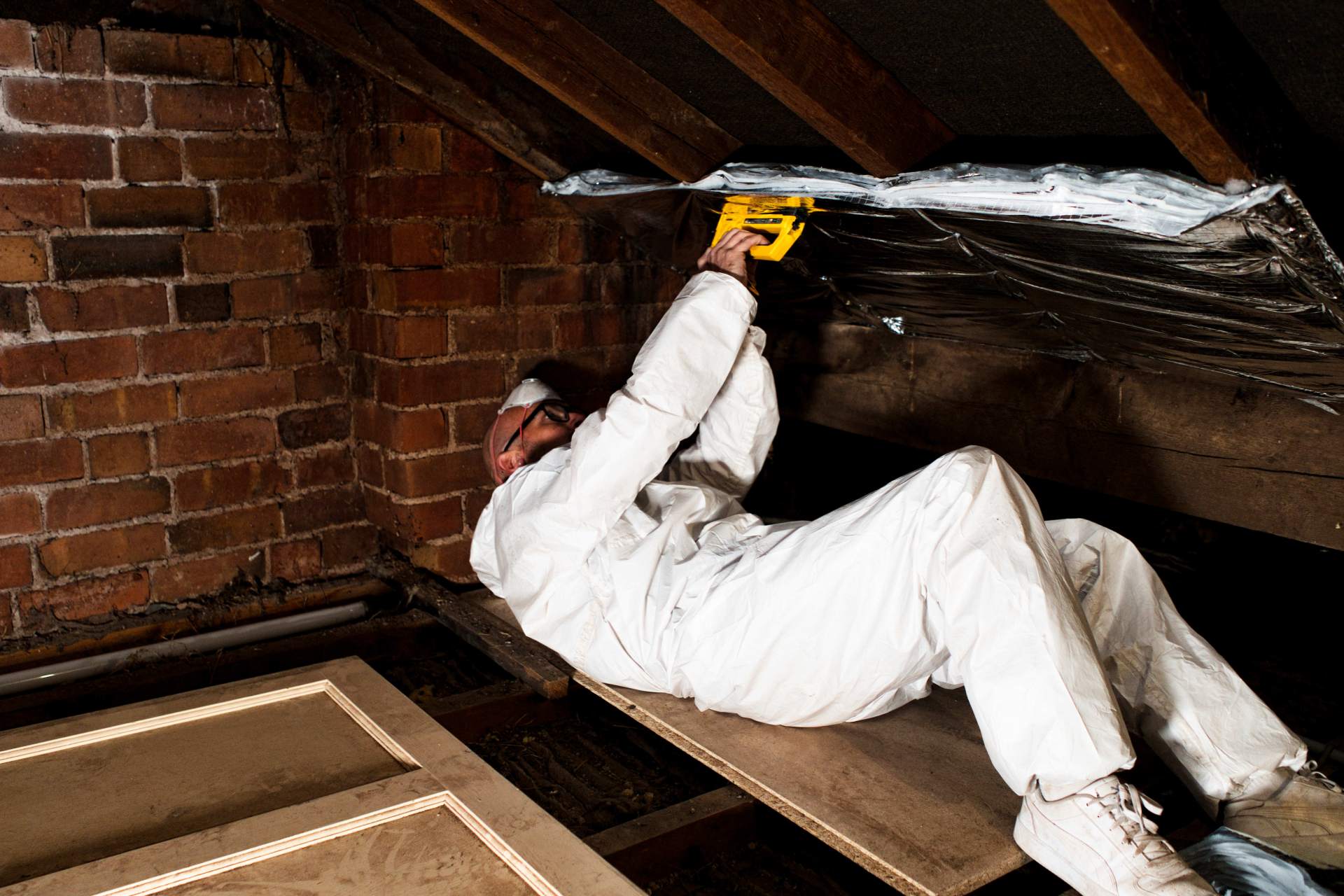
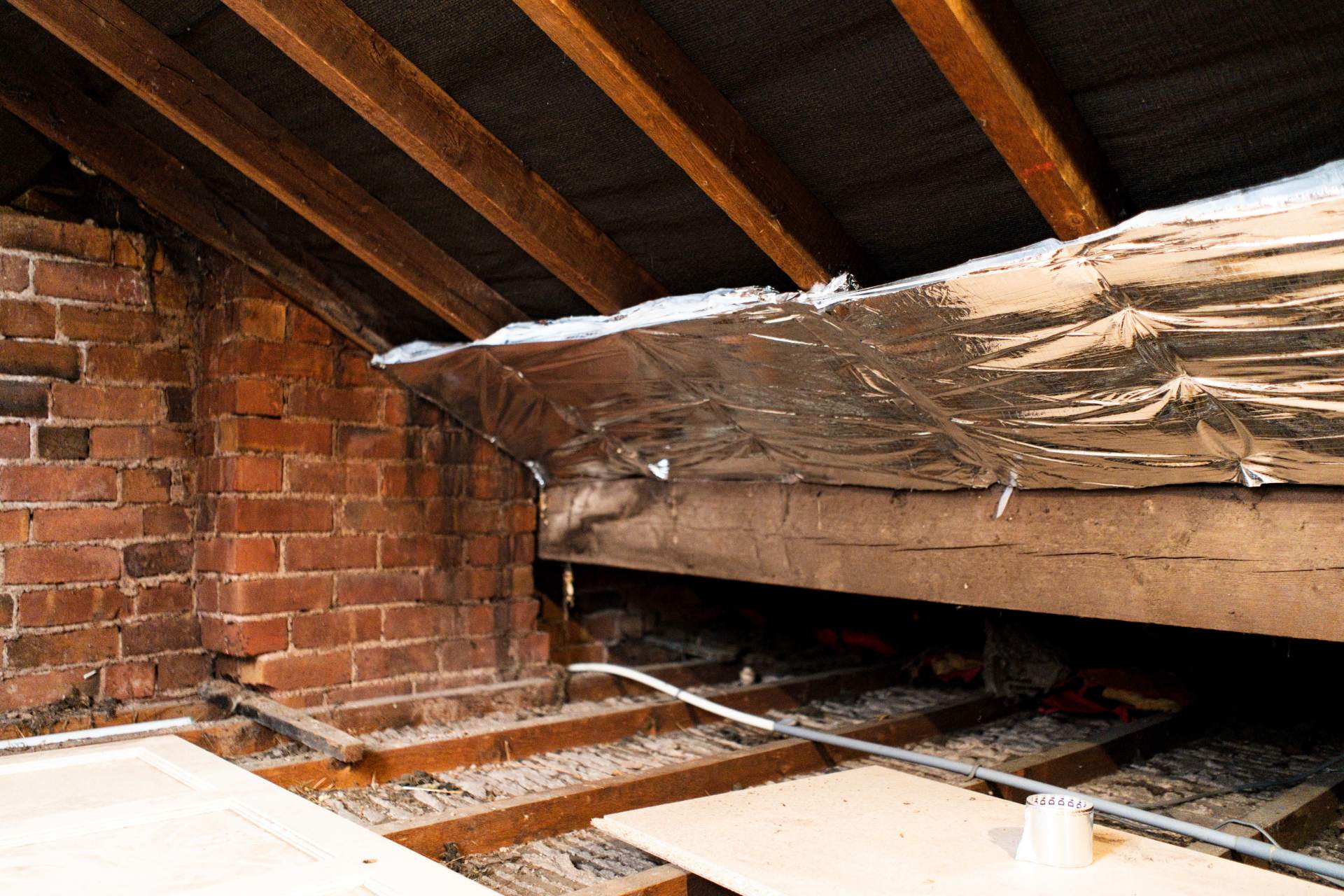
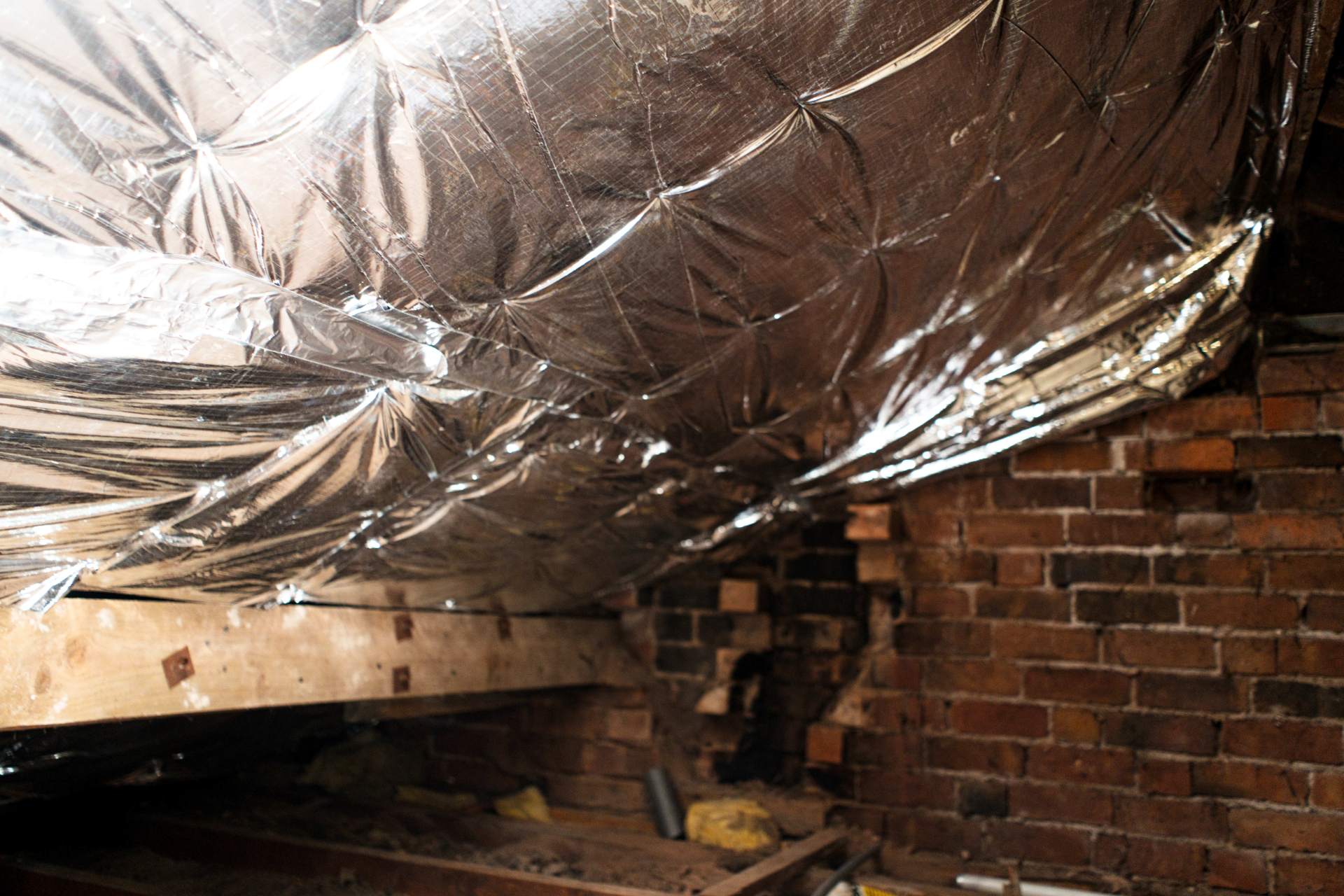
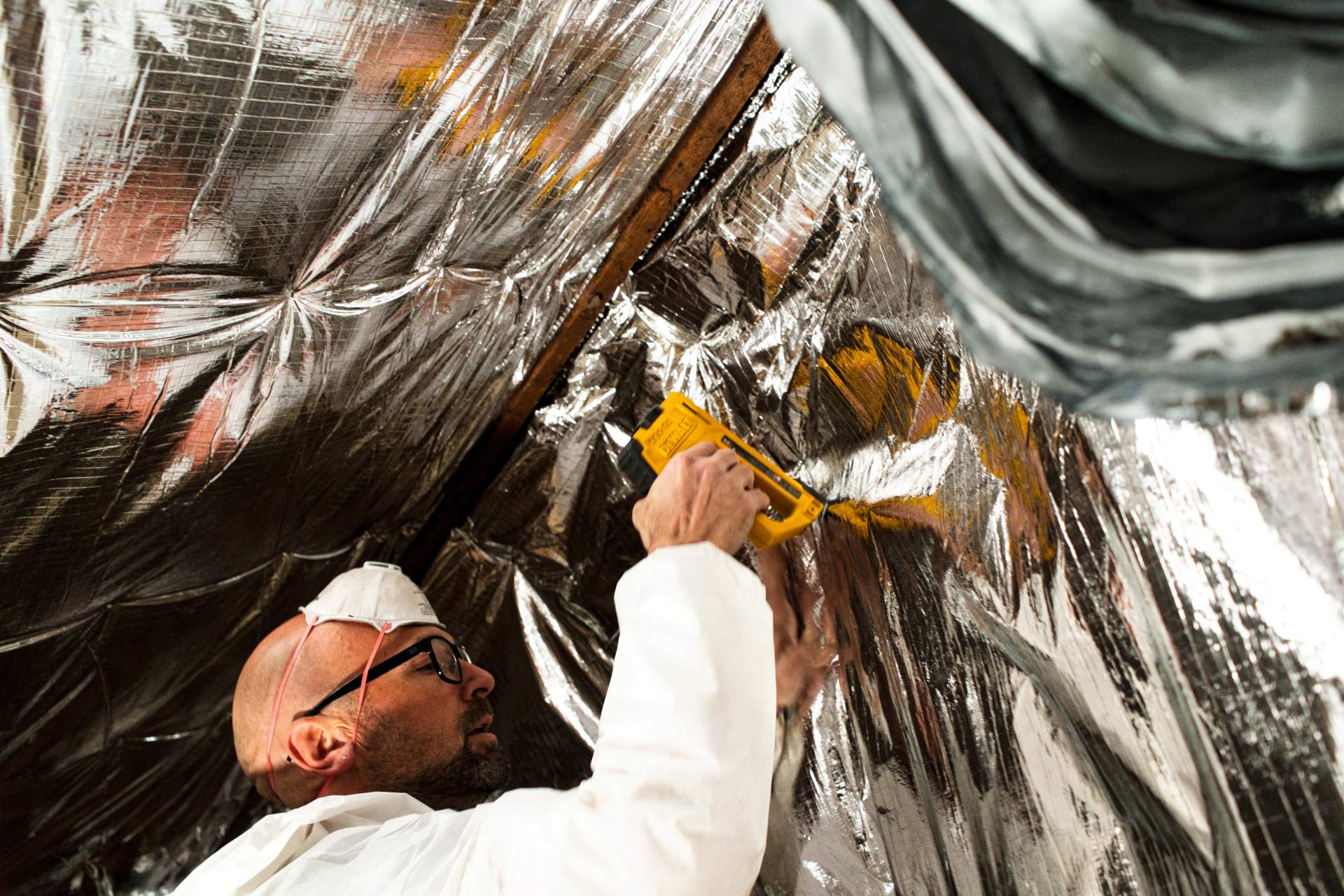
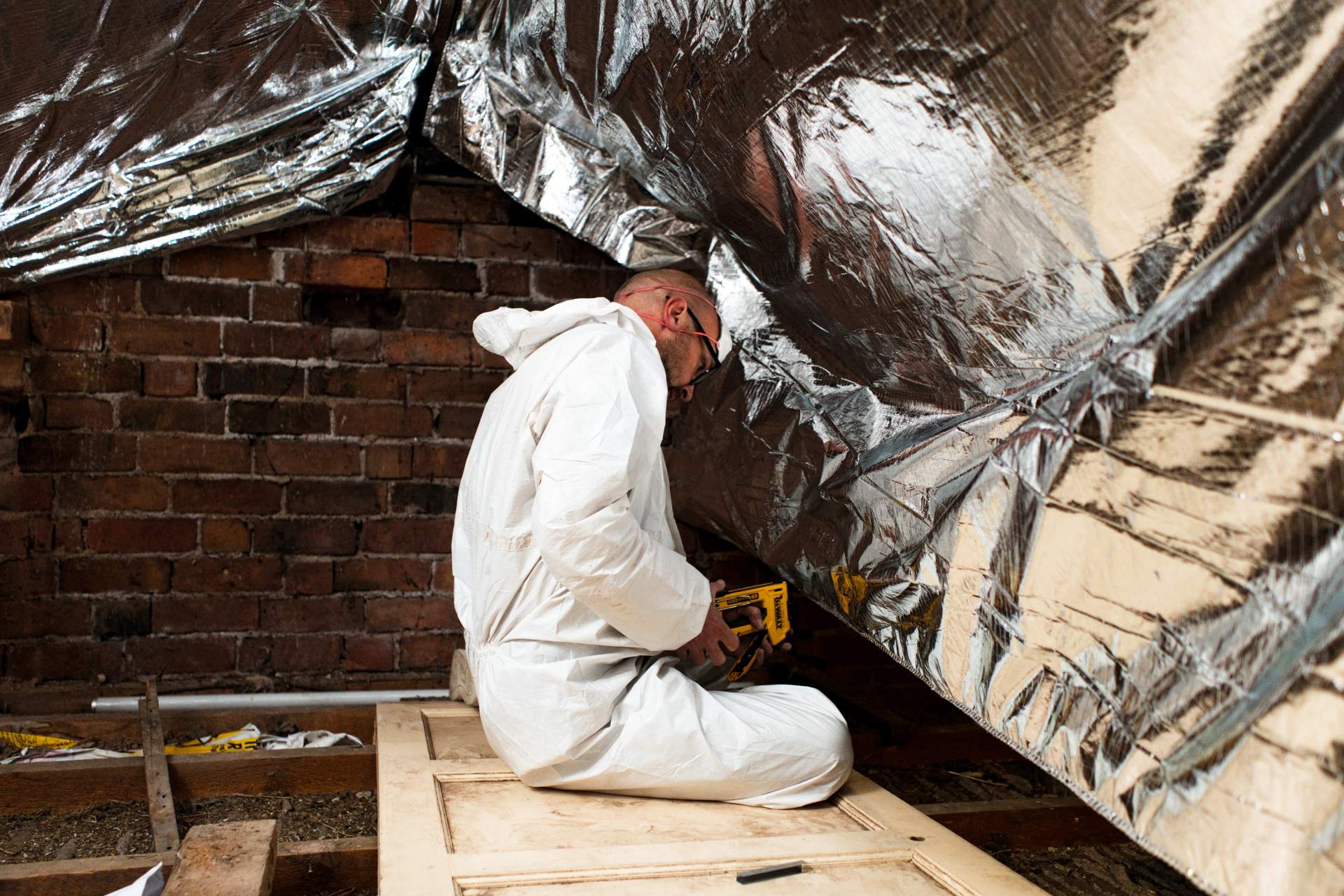
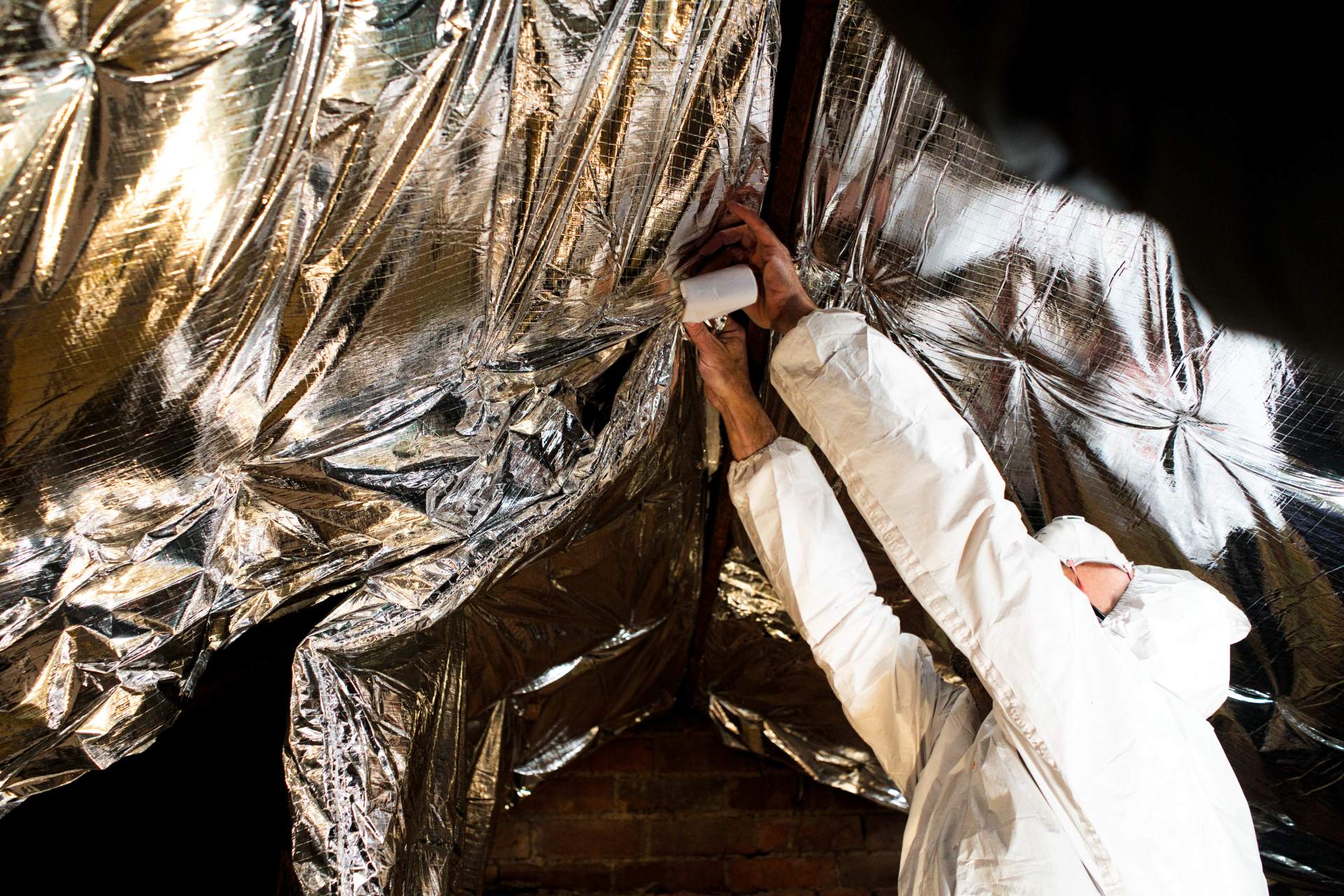
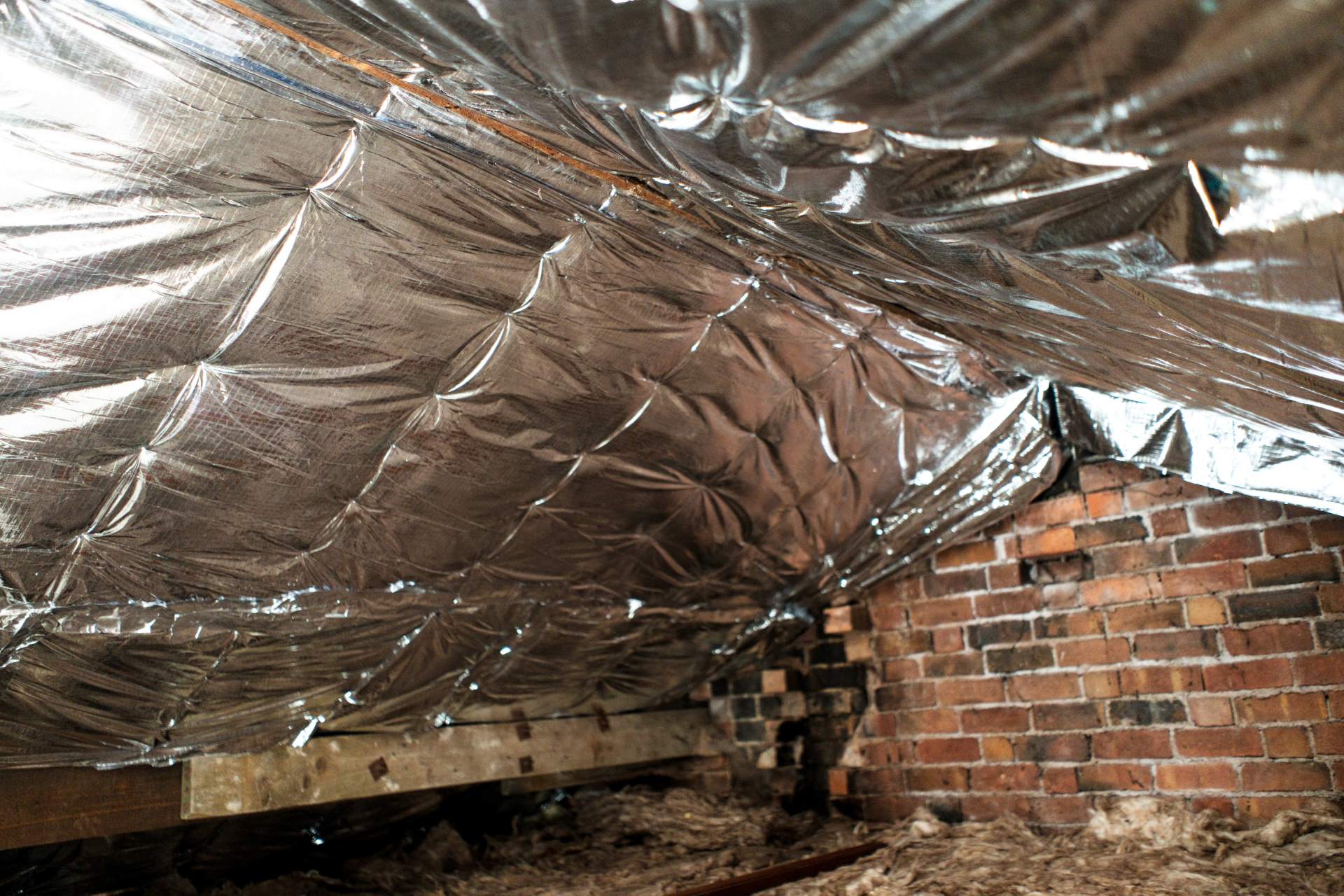
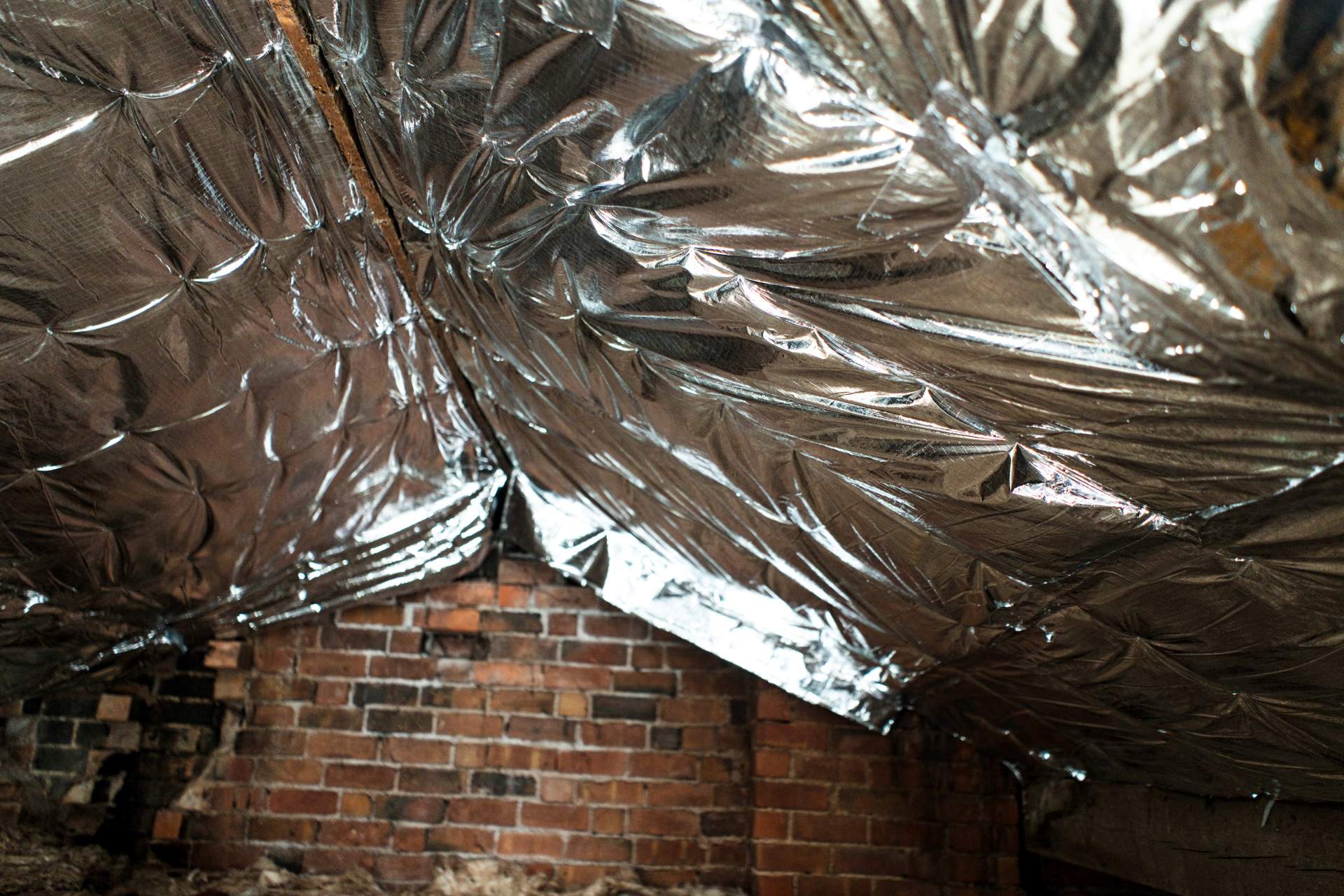
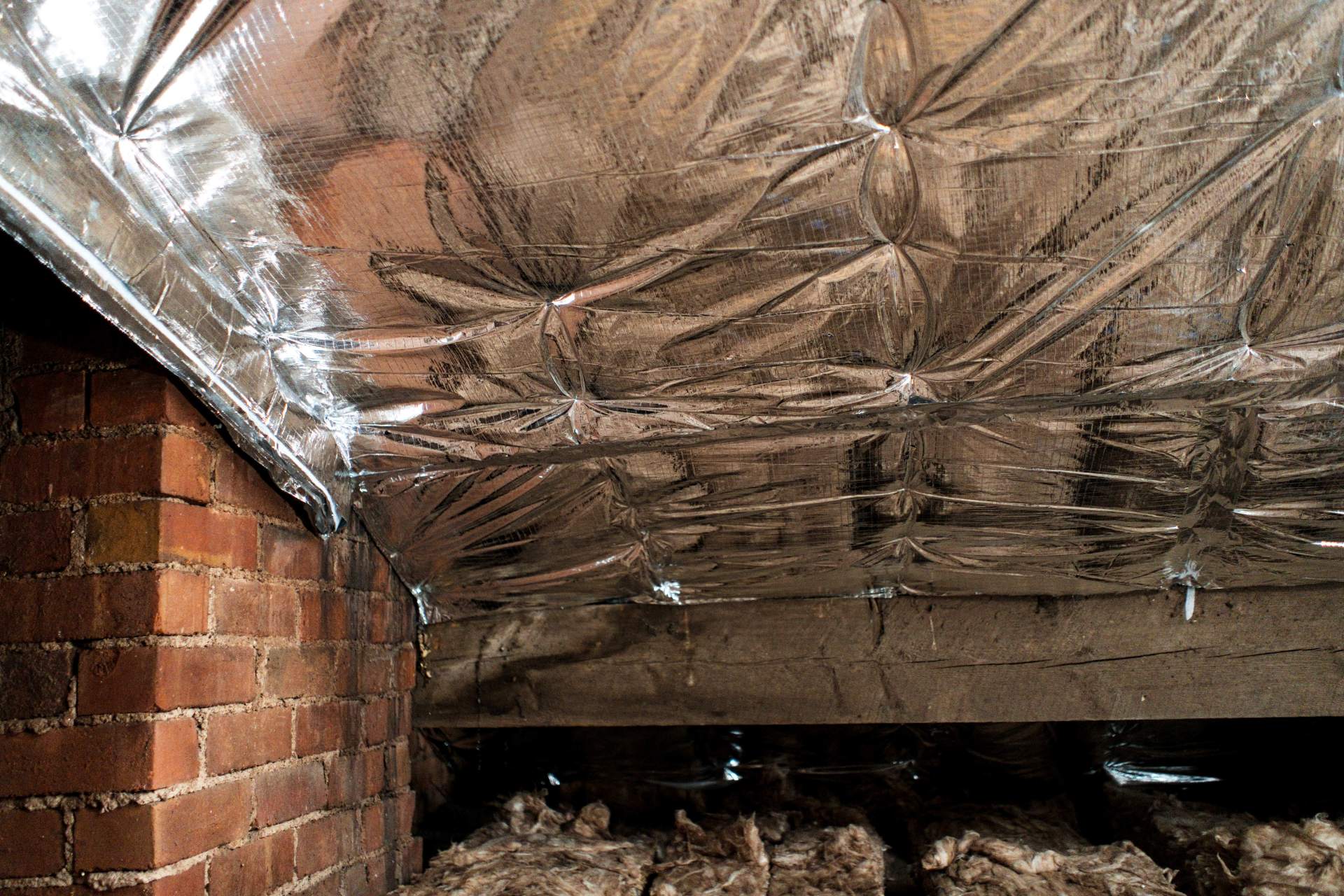
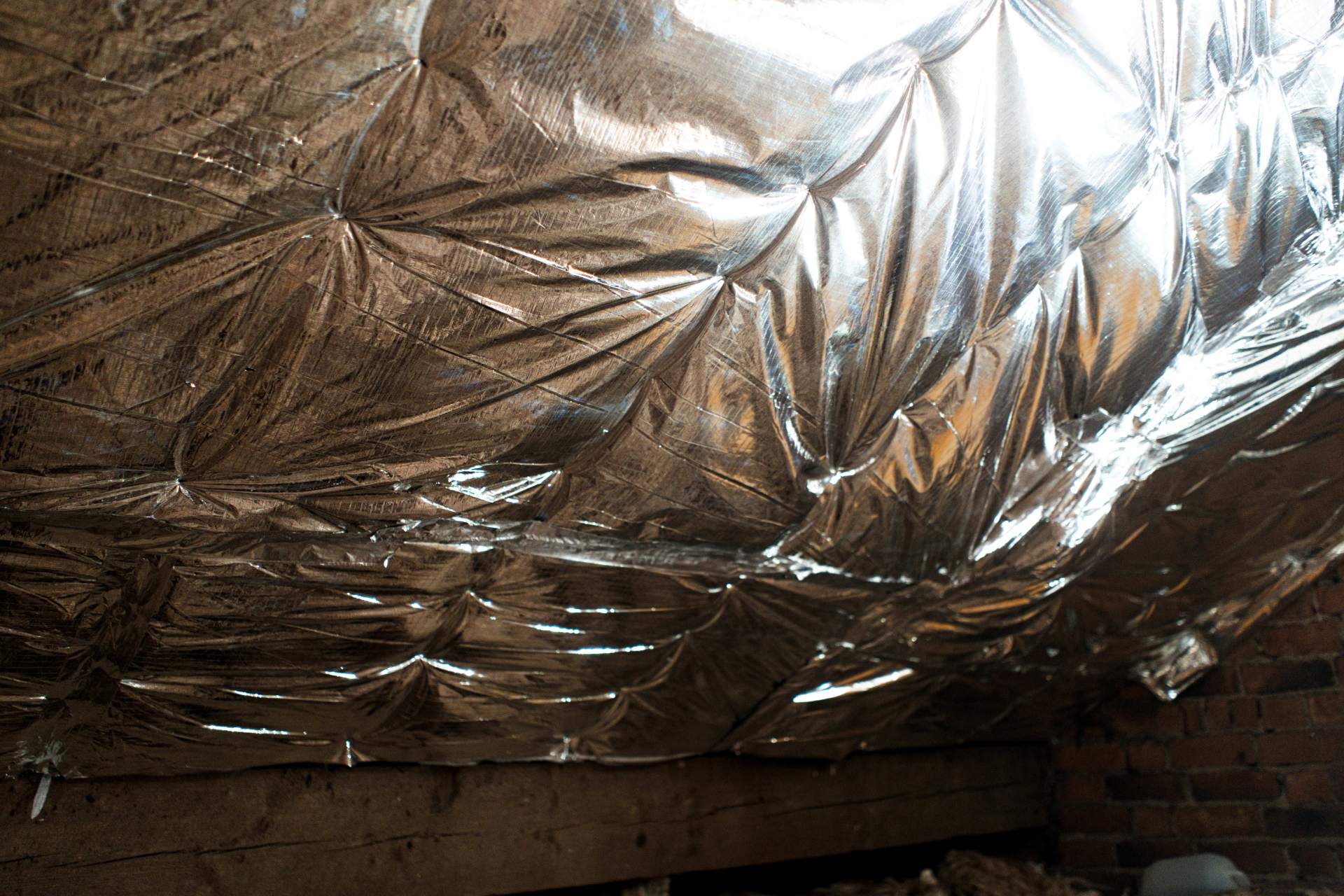
To further enhance the property’s energy performance and mitigate future moisture issues, we meticulously applied SF19 Foil to the underside of the roof structure. This advanced multi-foil insulation acts as a highly effective vapour barrier, preventing condensation from forming within the roof space. Simultaneously, its reflective properties significantly contribute to maintaining a consistent indoor temperature, providing a warmer environment for the occupants and offering a projected lifespan of 50+ years for lasting energy savings.
See The LoftFoil Process In Action
To give homeowners a clearer picture of what’s involved in a full loft transformation, we’ve produced a short video showcasing our team at work. The film follows projects just like this one in Malvern, from the careful removal of old, moisture‑laden fibreglass through to the installation of fresh loft roll and SF19 multi-foil insulation on the underside of the roof.
Watching the video, you’ll see:
- How we protect your home and safely handle and remove old materials
- The clean, methodical way our installers prepare and insulate the loft space
- The bright, reflective finish of the new foil insulation that helps stabilise temperatures and reduce future condensation