Condensation in Loft During Winter: Causes, Risks, and Proven Solutions
As the temperature drops and the frost settles across the Midlands and the South West, many homeowners notice a worrying change in their upper floors. You might walk up the ladder and find damp patches on the timber, moist felt, or even notice water droplets falling from the roof.
If you are experiencing condensation in loft during winter, you are not alone. This is a common issue across the UK, particularly in older properties in areas like Bristol, Bath, and the Cotswolds, where traditional insulation or poor ventilation can lead to moisture build-up.
In this guide, we will explore why winter loft condensation occurs, why your loft drips in winter, and how you can protect your home from structural damage.
Why does loft condensation occur in cold weather?
Understanding loft condensation cold weather patterns is the first step to fixing the problem. Condensation happens when warm, moist air from your living spaces meets the cold surfaces of your roof.
The Science of the "Dew Point"
During the colder months, the temperature difference between your heated home and the freezing outside air is at its peak. Warm air rises through the ceiling, carrying moisture from cooking, breathing, and drying clothes. When this warm air hits the cold roof felt or the underside of your tiles, it reaches its “dew point” and turns from a gas into liquid water.
Why does my loft drip in winter?
If you find yourself asking, “why loft drips in winter?“, the answer usually lies in one of three areas:
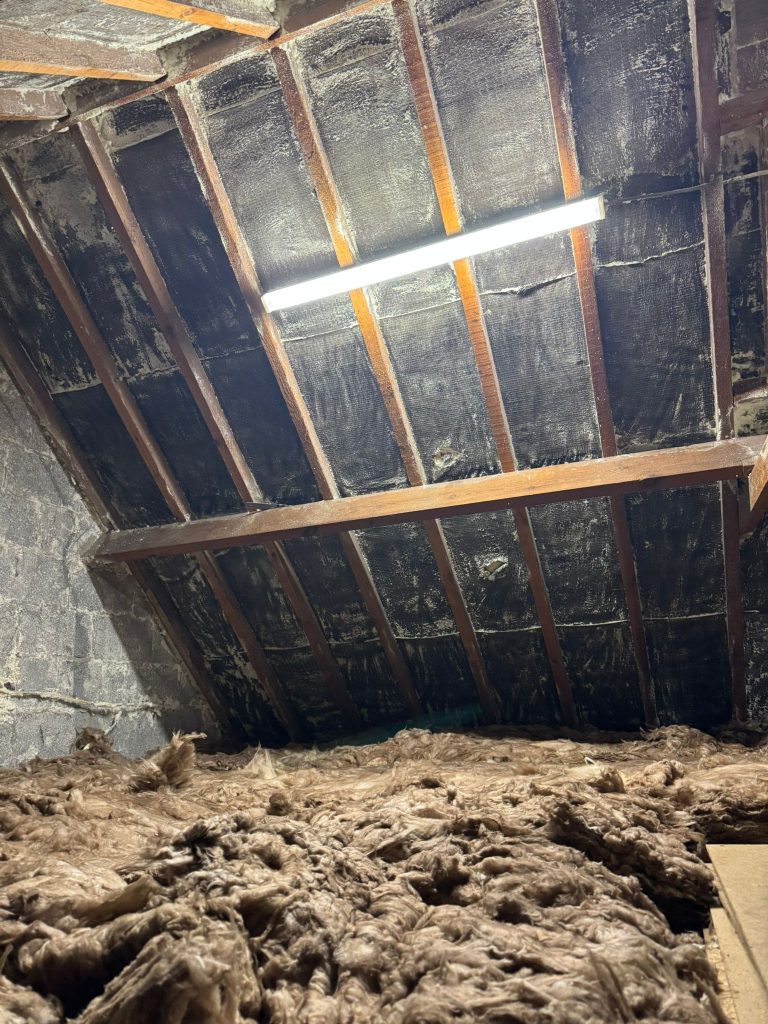
Inadequate Insulation: If your insulation is old, sagging, or ineffective (like mouldy fibreglass), it fails to create a thermal barrier. This allows the temperature of the roof felt to drop significantly, causing moisture to pool and drip.
The “Spray Foam” Problem: Many homeowners are discovering that spray foam insulation can trap moisture against the roof deck, preventing the timber from breathing and leading to significant damp issues.
Poor Ventilation: If your loft isn’t breathing properly, moist air becomes trapped, increasing the likelihood of water droplets forming on structural beams.
The Hidden Risks of Unchecked Condensation
Ignoring condensation in loft during winter is a risk to your property’s structural integrity. According to NHBC guidelines, when timber moisture content rises above 20%, it enters the “decay zone.” This is where you face the danger of wet rot and dry rot, which can damage your rafters and reduce the overall value of your home.
Furthermore, excessive moisture leads to mould growth, which can affect air quality and even lead to respiratory issues for your family.
If you want to dive deeper into specific preventative measures, you can read our guide on How to Stop Condensation in a Loft.
How to Fix Condensation and Protect Your Home
The good news is that there are highly effective, modern ways to tackle this issue without the mess and hassle of traditional bulky insulation.
1. Replace Old, Damp Insulation
If your current insulation is a damp, heavy mass of mineral wool or fibreglass, it may be the source of your problems. We specialise in the safe removal of old, ineffective insulation and replacing it with high-performance solutions. For more advice on recovery, see our article on How to Dry Out Condensation in a Loft.
2. Install SuperFOIL Multifoil Insulation
Our flagship SuperFOIL (specifically the YBS SuperQuilt 19-layer solution) is a game-changer for preventing winter loft condensation. Unlike traditional wool, SuperFOIL features an integrated vapour control layer. This prevents moisture from migrating into your roof structure, effectively stopping the condensation cycle before it starts.
Because it is a thin-profile solution, it provides incredible thermal efficiency—reflecting up to 97% of radiant heat—without the risk of sagging or moisture retention.
3. Address Exterior Wall Damp
Sometimes, moisture issues in the loft are linked to dampness penetrating through the exterior walls. Our ProPerla HomeCoat service provides a hydrophobic (water-repelling) barrier that keeps your masonry dry, helping your entire home maintain a stable temperature and reducing the moisture load on your roof.
Book Your Free Loft Survey
Every home is different. A Victorian terrace in Bristol will have different thermal needs than a modern bungalow in Malvern.
At Loft Foil, we don’t believe in “one size fits all.” We offer a Free Loft Survey where our experts will visit your property to:
- Evaluate the current condition of your insulation.
- Identify damp or structural issues.
- Check for signs of mould or timber decay.
- Provide a tailored, no-obligation quotation.
As official ProPerla & SuperFOIL Approved Installers, we provide manufacturer-backed guarantees (up to 25 years on certain installations) to give you total peace of mind.