Black Mould in Loft Insulation: Causes, Risks, and How to Fix It
Finding black mould in loft insulation can be a distressing discovery for any homeowner. Whether you have noticed small patches or large, dark clusters, the presence of mould in loft spaces is more than just an aesthetic issue; it is a sign that something is wrong with your home’s thermal performance or ventilation.
If you have spotted loft insulation black spots, you need to act quickly to protect your property’s structural integrity and your family’s health. In this guide, we will explore why this happens, the dangers of mouldy loft insulation, and the most effective ways to resolve the problem for good.
Why is there black mould in my loft insulation?
Mould thrives in environments that are dark, damp, and poorly ventilated. When dealing with black mould in loft insulation, the culprit is almost always excess moisture. There are three primary reasons why this occurs:
1. Condensation Issues
The most common cause of mould in loft spaces is condensation. Warm, moist air rises from your living areas into the loft. If your insulation is not managing this moisture correctly, the water vapour hits cold surfaces (like roof felt or timber beams) and turns back into liquid water. This moisture then gets trapped within your insulation, leading to mouldy loft insulation.
To understand how to manage this moisture effectively, you can read our detailed guide on How to Stop Condensation in a Loft.
2. Ineffective or Degraded Insulation
Traditional insulation, such as mineral wool or fibreglass, is highly absorbent. Once it becomes damp due to a leak or condensation, it acts like a sponge. Instead of insulating your home, it holds moisture against your roof timbers, creating the perfect breeding ground for black mould.
3. The "Spray Foam" Problem
Many homeowners in the UK are currently facing issues with spray foam insulation. While it aims to seal a space, it can often trap moisture against the underside of the roof felt. This prevents the structure from “breathing,” leading to hidden dampness and significant structural risks. If you suspect spray foam is the cause, professional removal is often the only way to prevent permanent damage.
The Dangers of Mouldy Loft Insulation
Ignoring loft insulation black spots can lead to a cascade of expensive problems:
- Health Risks: Mould spores can travel through your home, potentially causing respiratory issues, allergies, and skin irritation.
- Structural Damage: According to NHBC guidelines, if timber moisture content rises above 20%, it enters the “decay zone.” This can lead to wet or dry rot in your roof beams, compromising the safety of your home.
- Reduced Thermal Efficiency: Once insulation becomes damp or mouldy, it loses its ability to retain heat, leading to much higher energy bills.
- Property Value and Mortgages: Extensive mould or the presence of spray foam can make a property difficult to sell, as many lenders refuse financing for homes with visible moisture damage or problematic insulation.
Fortunately, choosing the right products can prevent these issues from occurring in the first place. You can learn more about How Loft Insulation Can Prevent Mould and Damp in Your Home.
How to Fix Black Mould in Your Loft
If you have already discovered black mould in loft insulation, you cannot simply spray it with bleach; the mould is likely deep within the material. Here is the professional way to handle it:
Step 1: Identify the Source
You must determine if the moisture is coming from a roof leak, a ventilation issue, or internal condensation. Without fixing the source, any new insulation you install will quickly become mouldy again.
Step 2: Remove the Old Insulation
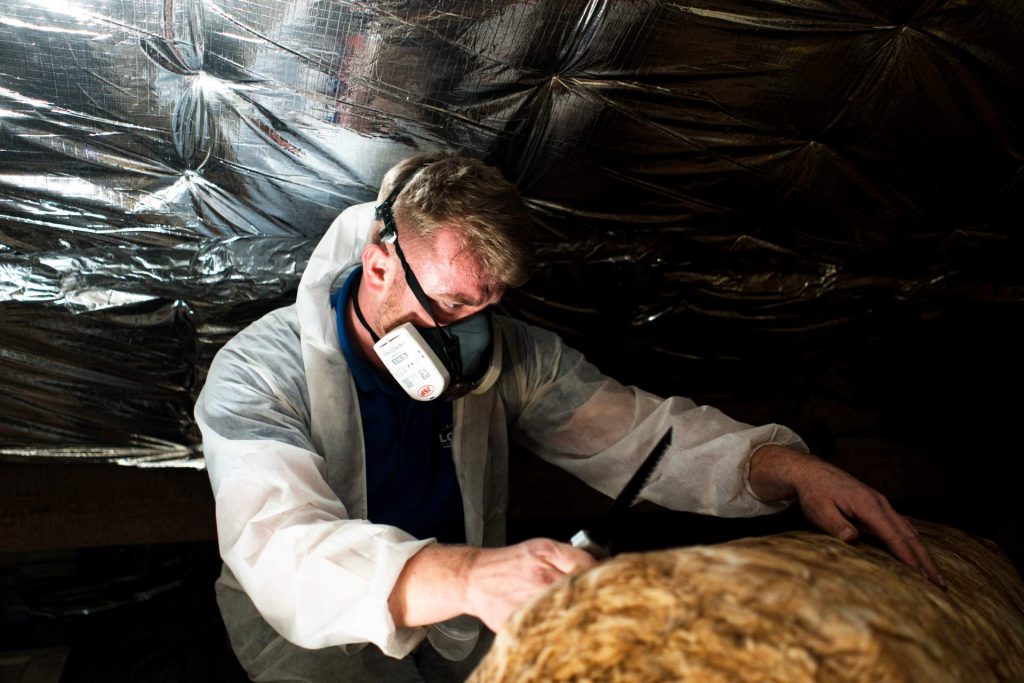
To truly solve the problem, the mouldy loft insulation must be removed entirely. This includes cleaning the affected timber beams to ensure no fungal spores remain. At Loft Foil, we specialise in the safe removal of old, ineffective, or damp fibreglass and mineral wool.
Step 3: Install High-Performance Insulation
Once the area is clean and dry, the best solution is to install a moisture-resistant alternative. We recommend SuperFOIL Multifoil Insulation.
Unlike traditional materials, SuperFOIL is:
- Moisture-resistant: It does not absorb water or hold onto dampness.
- Non-fibrous: It is safe to handle and won’t irritate your lungs.
- Integrated Vapour Control: It features a built-in vapour control layer that prevents condensation from reaching your structural beams, keeping them well below the 20% moisture threshold.
Get a Professional Assessment
Don’t leave your home’s health to chance. If you are worried about black mould in loft insulation or simply want to upgrade your home’s thermal efficiency, our expert team is here to help.
As official SuperFOIL and ProPerla Approved Installers, we have decades of experience in identifying damp issues and providing long-term solutions. We offer a Free Loft Survey where we will evaluate your loft’s condition, identify potential moisture issues, and provide a tailored recommendation to protect your home.