Insulating a loft that already has storage or flooring can be a bit tricky, but it’s entirely possible with the right approach. Many homeowners use their lofts for storage, which often involves boarding over the floor. However, this can compress traditional insulation materials, reducing their effectiveness. In this guide, we’ll explore the best ways to insulate a loft while maintaining or upgrading its storage functionality.
Challenges of Insulating a Loft with Storage or Flooring
Before diving into the solutions, it’s important to understand the challenges:
- Compressed Insulation: Traditional insulation materials like mineral wool lose their thermal performance when compressed under boards.
- Limited Space: Adding insulation while maintaining storage space can be difficult in lofts with limited headroom.
- Access Issues: Existing flooring may need to be lifted to install or upgrade insulation.
Best Insulation Options for Lofts with Storage or Flooring
When dealing with a loft that has existing storage or flooring, choosing the right insulation material and method is crucial. Here are the best options:
1. Insulation with Raised Loft Boarding
- What It Is: A raised loft boarding system creates space above the joists to accommodate insulation without compressing it.
- How It Works:
- Install loft legs or a similar raised system on top of the joists.
- Lay insulation between the joists to the recommended depth (270mm for mineral wool).
- Add a second layer of insulation at a right angle over the joists if needed.
- Secure the raised boards on top for storage.
- Why It’s Ideal:
- Maintains the full thickness of the insulation for maximum thermal performance.
- Provides a stable surface for storage.
2. Rigid Foam Boards
- What It Is: High-performance insulation boards made from materials like PIR or polystyrene.
- How It Works:
- Cut the boards to fit snugly between the joists.
- Lay the boards directly under the flooring or use them as the flooring itself if they are load-bearing.
- Why It’s Ideal:
- Provides excellent thermal resistance with less thickness compared to traditional materials.
- Durable and long-lasting.
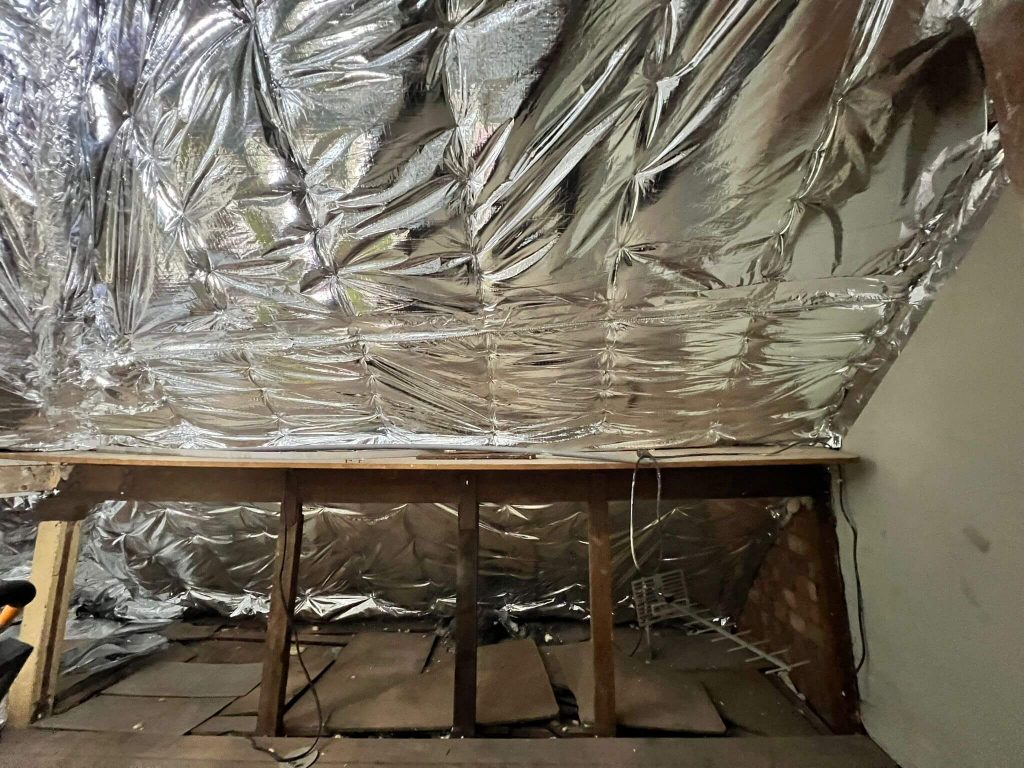
3. Multifoil Insulation
- What It Is: A thin, reflective insulation material made up of multiple layers of foil and wadding.
- How It Works:
- Install the foil insulation directly under the loft boards or between the joists.
- Secure with staples or tape to ensure a tight fit.
- Why It’s Ideal:
- Space-saving: Requires minimal thickness, making it perfect for lofts with limited headroom.
- Reflects radiant heat, improving thermal performance.
4. Loose-Fill Insulation
- What It Is: Granular or lightweight fibrous material that is poured or blown into place.
- How It Works:
- Pour or blow the loose-fill insulation into gaps between joists or under existing flooring.
- Why It’s Ideal:
- Fits easily into irregular spaces or around obstructions.
- Quick to install, especially for topping up existing insulation.
Step-by-Step Guide to Insulating a Loft with Storage or Flooring
Follow these steps to insulate your loft while maintaining or upgrading its storage functionality:
Step 1: Assess the Current Setup
- Check the depth and condition of the existing insulation.
- Measure the height of the joists to determine how much space is available for additional insulation.
- Identify any areas where the insulation is compressed or missing.
Step 2: Choose the Right Insulation Method
- If the joists are shallow, consider a raised loft boarding system or thin insulation materials like multifoil or rigid foam boards.
- For deeper joists, you can add traditional insulation materials like mineral wool.
Step 3: Lift Existing Flooring (If Necessary)
- Carefully remove any existing boards to access the insulation underneath.
- Inspect the insulation for signs of wear, damp, or compression, and replace if needed.
Step 4: Install or Upgrade Insulation
- For Raised Loft Boarding:
- Install loft legs or a similar system to raise the boards above the joists.
- Lay insulation between and over the joists to the recommended depth.
- For Rigid Foam Boards:
- Cut the boards to size and fit them snugly between the joists.
- Seal gaps with expanding foam or tape for an airtight finish.
- For Multifoil Insulation:
- Attach the foil insulation under the boards or between the joists using a staple gun or adhesive.
- For Loose-Fill Insulation:
- Pour or blow the material into gaps under the flooring.
Step 5: Replace or Add Flooring
- Once the insulation is installed, replace the flooring or add new boards on top of the raised system.
- Ensure the boards are securely fixed and provide a stable surface for storage.
Step 6: Draught-Proof the Loft Hatch
- Apply self-adhesive draught excluder tape around the edges of the loft hatch to prevent heat loss.
Tips for Success
- Avoid Compression: Never compress insulation materials, as this reduces their effectiveness.
- Maintain Ventilation: Ensure ventilation points, such as eaves or soffit vents, remain clear to prevent condensation.
- Work in Sections: Divide the loft into manageable sections to make the installation process easier.
- Check Building Regulations: Ensure your insulation meets the required U-value (0.16 W/m²K for lofts in the UK).
Why Choose Loft Foil for Your Insulation Needs?
At Loft Foil, we specialise in high-performance foil insulation that’s perfect for lofts with storage or flooring. Here’s why our products are the ideal choice:
- Space-Saving Design: Our multifoil insulation is thin yet highly effective, making it ideal for tight spaces.
- Easy Installation: Lightweight and flexible, it’s simple to install under existing flooring.
- Durable and Long-Lasting: Designed to perform for decades without degrading.
- Eco-Friendly: Reduces energy consumption and lowers your carbon footprint.
Final Thoughts
Insulating a loft with existing storage or flooring requires careful planning, but it’s entirely achievable with the right materials and techniques. By using solutions like raised loft boarding, rigid foam boards, or multifoil insulation, you can improve your home’s energy efficiency without sacrificing valuable storage space.
If you’re ready to upgrade your loft insulation, contact Loft Foil today. Our team of experts can help you choose the best solution for your home and ensure a professional, hassle-free installation. Let’s make your home warmer, greener, and more energy-efficient!